
 Sir Linus
Why Restraints Matter
Of all the equipment in a Dominant’s arsenal, restraints occupy the most fundamental space.
They don’t create sensation like impact toys. They don’t silence like gags. They do something more primal: they take movement.
The ability to move is the last thread of autonomy. Even when blindfolded, gagged, vulnerable — if you can still move, you retain agency. You can pull away. You can shift position. You can protect yourself.
Restraints remove that final thread.
For the right dynamic, this is profound. The submissive stops managing. Stops calculating. Stops holding any responsibility for what happens next. They can finally surrender completely because there’s nothing left to surrender.
The Fantasy Factory sells restraints as accessories. Pink fuzzy handcuffs from the sex shop checkout counter. Under-bed systems advertised next to massage candles. Equipment treated like costumes — props for a performance.
But real restraints aren’t props. They’re language. Each type says something different.
The cold weight of steel handcuffs speaks differently than the warm embrace of leather cuffs. Rope creates intimacy through the ritual of application. Chains make sound — a metallic reminder with every movement that escape isn’t possible.
The question isn’t “what restraints should a beginner use.” The question is: what does your dominance want to say?
The Physics of Control
Before you choose equipment, understand how restraints actually work.
Material Psychology
Every material carries psychological weight beyond its function:
Metal is uncompromising. Cold against skin. Unyielding. It doesn’t conform to the body — the body conforms to it. Metal speaks in absolutes. The Commander’s choice. The Enforcer’s declaration.
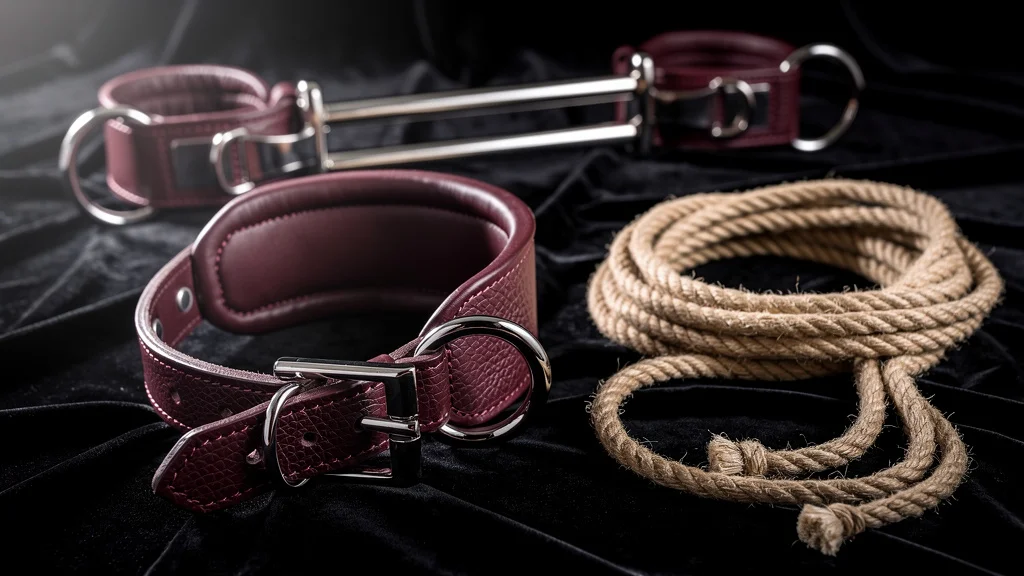
Leather is warm. It molds to the wearer over time, creating a sense of belonging to the dynamic. Quality leather develops character — it ages with use, creating history. The Ritualist gravitates here. Each buckle is ceremony. Each strap, intention made visible.
Rope is intimate. It requires touch to apply. Time. Attention. The person being tied feels every pass of fiber across skin. Rope creates custom restraint — exactly what this body needs, in this moment. The rigger’s exclusive domain.
Synthetic materials (nylon, neoprene, silicone) prioritize function. Easy to clean, durable, practical. Less ceremony, more efficiency. The pragmatist’s arsenal.
None of these is better. They’re different dialects of the same language.
The Ritual of Application
Here’s what most guides miss: applying restraints is part of the scene, not preparation for it.
A submissive watching you buckle leather cuffs — hearing each hole click into place, feeling you test the tightness, the final tug to confirm security — that’s not setup. That’s dominance in action.
The slow pass of rope. The methodical wrapping. The shift in breathing as mobility decreases and helplessness increases. That’s the scene beginning, not the scene waiting to start.
The Fantasy Factory teaches restraints as endpoints: “Get them tied up so you can do the thing.” The Underground knows: the tying is the thing. Everything after is consequence.
Cuffs & Wrist Restraints
The most accessible category — and the most misunderstood.
Leather Cuffs
What they express: Enduring control. Weight. Presence. These aren’t quick — they’re intentional.
Lined vs Unlined:
- Lined cuffs (soft leather or fleece inside) distribute pressure evenly, allowing for longer wear and tighter restriction without discomfort.
- Unlined cuffs deliver more sensation — the edge of leather against skin creates awareness. Shorter scenes, more intensity.
Lockable vs Velcro:
- Locking buckles create finality. The click of a padlock is psychological as much as physical. “You’re not getting out until I decide.”
- Velcro closures prioritize safety and speed. Quick release if needed. The Guide’s choice for training, where removing restraints quickly might be necessary.
The Ritualist’s Domain: Leather cuffs turn restraint into ceremony. The selection of which cuffs. The presentation. The buckling — one hole at a time, testing tightness, the submissive’s wrists offered for inspection.
Each step is protocol. Each detail, meaning.
Quality indicators:
- Double-stitching on stress points
- Stainless steel hardware (won’t rust)
- Full-grain leather (not bonded or “genuine” leather)
- D-rings welded, not just sewn
- Padded lining that won’t compress with use
Expect to pay $40-80 for quality wrist cuffs. Anything cheaper is Fantasy Factory costume gear.
Metal Handcuffs
What they express: Immediate authority. Uncompromising. No warmth, no give.
Police-Style Handcuffs: The iconic image. The sound. The cold metal click. These carry cultural weight — law, authority, consequence.
Decorative Handcuffs: Aesthetic versions with padding, colored coating, softer edges. They look like handcuffs but sacrifice some of the unforgiving character for comfort.
Critical Limitations: Metal handcuffs are not for extended wear. 15-20 minutes maximum. The rigid design and narrow contact area create pressure points that compress nerves rapidly.
Radial nerve damage (numbness, tingling, weakness in hands) can occur quickly with metal cuffs. This isn’t “advanced vs beginner” — this is basic anatomy. Metal cuffs don’t distribute pressure. Period.
Use them for psychological impact. For short, intense moments. For the idea of being handcuffed. Not for hour-long scenes.
Safety non-negotiables:
- Always use double-locking mechanism (prevents cuffs from tightening further)
- Keep the key immediately accessible (not across the room, IN YOUR POCKET)
- Check circulation every 5-10 minutes
- Remove immediately if submissive reports numbness, tingling, or coldness
Padded Cuffs (Medical-Grade)
What they express: Control designed for endurance. Comfort that enables longer surrender.
These are the Sensualist’s choice. Wide surfaces distribute pressure. Thick padding protects nerves. Adjustable closures allow for precise tightness.
Materials:
- Neoprene — waterproof, easy to clean, durable
- Fleece-lined leather — warmth plus durability
- Medical-grade foam — maximum comfort, professional restraint quality
When to choose these:
- Scenes lasting 30+ minutes
- Submissives with nerve sensitivity
- Sleep restraint (always supervised)
- Training scenarios where focus should be on the dynamic, not managing discomfort
Padded cuffs don’t sacrifice authority for comfort. They extend authority by making longer scenes possible.
Under-Bed Restraints
What they express: Accessible control. Portable. Discreet.
Four straps that slide under a mattress, each ending in a cuff or clip. Install in seconds. Remove just as fast. Store invisibly.
Why these matter: For many people building their first arsenal, under-bed systems are the entry point. They’re affordable ($25-60), require no installation, and work in any living situation.
The Fantasy Factory treats these as “beginner gear” you’ll outgrow. That’s backwards. They’re versatile gear that remains useful regardless of experience.
Quality features to look for:
- Adjustable strap length (beds vary in size)
- Strong Velcro or buckle anchors (cheap systems slip)
- Detachable cuffs (so you can upgrade cuffs without replacing the system)
- Machine-washable straps
The limitation: Under-bed restraints restrict to one position: spread on the bed. You can’t lead someone restrained this way. You can’t reposition mid-scene without removing restraints.
If your dominance wants mobility, variety, or the ability to move your submissive through space — these aren’t enough. But for what they do, they do it well.
Bondage Rope
Rope is not equipment. It’s a discipline.
The Rigger doesn’t collect tools — they master one tool so completely that it becomes an extension of their dominance. Every other restraint is manufactured, purchased, pre-made. Rope is applied. Custom. Intimate.
Natural Fibers
Hemp: The traditional choice. Significant grip on skin — rope doesn’t slide once placed. Takes conditioning (treatment with oil to soften fibers), but the result is durable, long-lasting rope with character.
Standard for Shibari and Japanese-style bondage. The texture matters here — hemp feels like rope. Rough enough to create awareness, smooth enough not to irritate.
Diameter: 6mm is standard. 8mm for more comfort, less bite.
Care: Hand wash, air dry. Never machine wash — it destroys the fiber treatment. Store loosely coiled.
Jute: Lighter than hemp. Smoother texture. Also requires conditioning, but less intensive. Popular in European rope communities.
Jute breaks in faster than hemp. It’s more affordable. The trade-off: less durable over time. Jute rope has a lifespan — expect to replace after heavy use.
Cotton: The beginner-friendly natural fiber. Soft. No conditioning needed. Machine washable. Minimal grip.
Cotton doesn’t hurt. It also doesn’t hold knots as securely. For learning ties, practicing technique, or scenes where comfort outweighs all other factors — cotton works.
For the aesthetic and tactile experience serious riggers want, cotton is too soft. Too forgiving. It doesn’t speak the way hemp or jute does.
Synthetic Rope
Nylon/MFP (Polypropylene): Durable. Easy care. Slippery.
Synthetic rope slides more than natural fiber — good for quick ties and removal, bad for holding tension without constant adjustment. You can throw it in the washing machine. It dries fast. It lasts nearly forever.
The trade-off: it feels synthetic. There’s no warmth, no organic texture. Functional, not intimate.
When to choose synthetic:
- Learning ties (cheap, replaceable)
- Suspension (strength-to-weight ratio is excellent)
- Situations requiring sterilization (synthetic can be disinfected)
When to skip it:
- If tactile experience matters
- Shibari or decorative rope work (synthetics lack the aesthetic)
- Scenes where rope itself is part of the sensory experience
Technical Specifications
Diameter:
- 4mm — Thin, decorative, creates defined lines on skin. Not for load-bearing.
- 6mm — Standard. Versatile. Holds knots well. Comfortable for most bodies.
- 8mm — Comfort-focused. Distributes pressure over wider area. Easier on wrists/ankles.
Length:
- 15 feet (5m) — Single limb ties. Wrist or ankle cuffs, basic column ties.
- 25-30 feet (8-10m) — Chest harnesses, multi-point ties, body work.
- 50+ feet — Full-body ties, suspension preparation (requires advanced skill).
The Rigger’s arsenal includes multiple lengths. The beginner starts with 15-foot lengths to learn fundamental ties before investing in longer rope.
The Rigger’s Domain
If you’re drawn to rope — not as one tool among many, but as the tool — you’re not just choosing equipment. You’re choosing a discipline.
Rope bondage is technical. There are books, workshops, certifications. The learning curve isn’t a weekend. It’s months of practice on inanimate objects before you ever tie a person.
This is the trade-off: Rope offers infinite customization. Perfect fit for any body. Ties that achieve exactly what you want, nothing more, nothing less. But it demands mastery.
If that appeals to you, pursue it completely — seek out workshops, instructors, and dedicated practice time. If rope feels like too much focus for one tool, the other restraints in this guide will serve you just as well.
Spreader Bars & Rigid Restraints
Where rope is customization, spreader bars are enforcement.
What they express: Mandated positioning. No negotiation.
Spreader Bars
A rigid bar (metal or wood) with attachment points at each end, forcing limbs apart.
Adjustable vs Fixed:
- Adjustable bars (telescoping) fit different bodies and allow you to vary the spread.
- Fixed-length bars are simpler, sturdier, and make a statement: “This is how far apart you’ll be.”
Common Lengths:
- 12-18 inches — Wrist spreaders, moderate ankle spread
- 24-36 inches — Standard ankle spreaders, creates significant leg spread
- 48+ inches — Extreme spreads, limited mobility
Positions:
- Ankles spread (most common)
- Wrists spread (arms overhead or in front)
- Wrist-to-ankle (on back, extreme vulnerability)
- Neck-to-wrist yokes (see below)
The Commander’s Tool: Spreader bars enforce positioning with zero ambiguity. “Legs apart” can be resisted, adjusted, subtly changed. A 30-inch spreader bar doesn’t negotiate.
This is equipment for Dominants who want obedience made visible and inescapable.
Yokes (Neck/Wrist Restraints)
A bar that rests across the shoulders/neck with wrist attachments at each end.
What they express: Comprehensive upper body control. Arms held in specific position, unable to reach the body or the restraint itself.
SAFETY CRITICAL: Yokes place pressure near the neck. This is not beginner equipment because the margin for error is smaller.
Never:
- Leave someone in a yoke unattended
- Use on someone who can’t remain standing/kneeling comfortably
- Ignore complaints of numbness in arms (positional nerve compression)
Time limits: 15-30 minutes maximum for most people. Holding arms in fixed position fatigues quickly.
Bondage Furniture (Crosses, Stocks, Frames)
St. Andrew’s Cross: X-shaped frame (wall-mounted or freestanding) with attachment points at each end. The submissive is restrained spread-eagle, fully exposed.
Stocks: Wooden or metal device that locks the head and/or hands in place, forcing a bent-over position.
The Disciplinarian’s Domain: Furniture turns restraint into spectacle. The visual impact is undeniable. The psychological weight — being locked into a device designed for this exact purpose — is significant.
Installation considerations: Wall-mounted furniture requires structural support. You’re not hanging this on drywall with basic anchors. Studs, reinforced mounting, or freestanding models only.
If you’re renting, traveling, or can’t install permanent fixtures — furniture isn’t practical. Save this for dedicated spaces or committed setups.
Specialty Equipment
Hogtie Connectors
Metal or leather connectors that link wrist and ankle restraints, forcing a hogtied position.
4-Point Hogtie: Wrists to ankles (behind back). Classic hogtie position. Extreme restriction, intense vulnerability.
5-Point Hogtie: Adds a collar to the 4-point system, limiting head movement.
The Primal’s Choice: Hogties create a specific kind of helplessness. No standing. No significant movement. The submissive is reduced to a bound form — exactly what some Primals want to express.
Safety:
- Never leave hogtied person face-down unsupervised (breathing restriction risk)
- Check circulation every 10-15 minutes (multiple limbs restricted)
- Time limits: 20-30 minutes max for most people
- Have EMT scissors immediately accessible
Bondage Tape
Self-adhesive tape that sticks to itself but not to skin or hair.
What it expresses: Spontaneity. Quick restraint. No skill required.
Wrap wrists, ankles, or any body part. The tape bonds to itself, creating restraint without knots, buckles, or hardware.
Advantages:
- Zero learning curve
- No cleanup (disposable)
- Won’t damage skin or pull hair
- Works anywhere, anytime
Limitations:
- Single use (doesn’t reuse well)
- Not as secure as purpose-built restraints (can be broken with effort)
- Ongoing cost (need to replace)
When to choose bondage tape:
- Travel (TSA-friendly, compact)
- Spontaneous scenes
- Beginners exploring restraint before investing in equipment
- Situations where quick application matters more than long-term security
Stocks & Pillories
Wooden or padded devices that lock the neck and wrists (pillory) or just wrists (stocks).
What they express: Punishment positioning. Public display (even if the “public” is just you).
The bent-over posture creates strain over time — that’s part of the point. This isn’t comfort equipment. It’s consequence equipment.
Time limits:
- 15-30 minutes for most people
- Posture strain accumulates — check in frequently
- Allow position changes if scene extends longer
The Disciplinarian’s Arsenal: For Dominants whose authority includes correction, consequence, and visible submission — stocks communicate all three simultaneously.
Suspension Gear
ADVANCED ONLY.
Suspension is not “the next level” of bondage. It’s a separate discipline with serious risk if done incorrectly.
What’s required:
- Structural anchor points rated for human weight (minimum 500 lbs)
- Suspension-specific rope (dynamic load-bearing)
- Extensive training (workshops, certified instruction)
- Understanding of load distribution, nerve compression, and positional asphyxiation risks
When to DIY: Never, unless you’ve been trained by someone with documented expertise.
When to hire professionals: Always, until you’ve completed formal training.
Suspension done correctly is beautiful, intimate, intense. Suspension done incorrectly causes permanent nerve damage, loss of consciousness, or death.
The Fantasy Factory sells suspension equipment like it’s the “advanced kit” you graduate to. The Underground knows: you don’t graduate into suspension. You train into it, extensively, or you don’t do it at all.
Connection Hardware
Restraints are only as strong as their weakest link. That link is usually the hardware connecting them.
Carabiners
Locking carabiners: A threaded sleeve or gate that prevents accidental opening. Once clipped and locked, they don’t release unless deliberately unlocked.
Use these for: Suspension, load-bearing connections, any scenario where accidental release could cause harm.
Non-locking carabiners: Quick clip and release. Convenient but not secure under load or movement.
Use these for: Light restraint, temporary connections, training scenarios where you might need to release quickly.
Weight ratings: Climbing-grade carabiners are rated in kN (kilonewtons). For human bondage, 20kN minimum. Don’t use decorative carabiners from craft stores — they’re not load-rated.
D-Rings, O-Rings, Swivels
D-Rings: Metal rings (D-shaped) sewn or welded into cuffs, collars, and harnesses. These are your attachment points.
Quality matters:
- Welded D-rings won’t pull apart under tension
- Riveted D-rings can fail with enough force
- Sewn-only D-rings (no metal backing) are Fantasy Factory quality
O-Rings: Circular rings. Same function as D-rings, different shape. Often found on collars.
Swivels: Rotating connectors that prevent rope or chain from tangling as the submissive moves.
Use these for: Longer scenes where the restrained person will shift position. Prevents the psychological distraction of twisted restraints.
Chains
What they express: Sound. Weight. Cold metal. The rattle of movement.
Chains are functional and psychological. They announce restraint. Every shift, every pull — audible.
Length matters:
- Short chains (6-12 inches) allow minimal movement
- Medium chains (18-36 inches) permit position changes while maintaining restriction
- Long chains (4+ feet) create tether rather than restraint
Link size:
- Small links (decorative, lighter weight)
- Large links (industrial, heavier, more visual impact)
Every connector is a potential point of failure.
Inspect hardware regularly. Check for:
- Cracks in metal
- Bent carabiners
- Loose rivets
- Worn stitching on sewn components
Replace compromised hardware immediately. This is not an area to “make do.”
Safety: The Mark of Mastery
The Fantasy Factory sells restraints as toys. They’re not.
Restraints restrict blood flow. They compress nerves. Applied incorrectly or left too long, they cause permanent damage.
A true dominant knows restraint mechanics the way a pilot knows their aircraft. Not because they’re paranoid. Because they’re competent.
Nerve Damage Zones (CRITICAL)
These are the danger areas where nerves run close to the surface:
Wrists — Radial Nerve: Runs along the thumb side of the wrist. Compression causes numbness in thumb, index, and middle fingers.
Prevention: Avoid tight restraints directly on the wrist joint. Cuffs should sit just above or below the wrist bone, never directly on it.
Elbows — Ulnar Nerve: The “funny bone” nerve. Runs along inner elbow.
Prevention: Don’t bind elbows tightly. If you’re creating arm restraints, keep pressure off the inner elbow entirely.
Armpits — Brachial Plexus: Network of nerves running from neck to arm. Compression can cause arm numbness, weakness, or paralysis.
Prevention: Avoid rope or straps crossing directly through armpits. If creating chest harnesses, ensure straps go around the armpit area, not through it.
Upper Arms — Radial Nerve (Again): Also vulnerable on outer upper arm (spiral groove).
Prevention: Wide cuffs distribute pressure. Avoid thin rope directly on upper arms.
Ankles — Peroneal Nerve: Runs around outside of knee and down outer ankle.
Prevention: Ankle cuffs should be wide and padded if worn tightly. Check for foot numbness.
Circulation Check Protocol
Every 10-15 minutes for tight restraints. No exceptions.
The 5-Point Check:
- Color — Pale or blue skin indicates poor circulation. Release immediately.
- Temperature — Cold extremities = circulation problem. Release immediately.
- Sensation — Ask: “Can you feel me touching your fingers/toes?” Numbness = nerve compression. Release immediately.
- Movement — Ask: “Wiggle your fingers/toes.” Can’t move = problem. Release immediately.
- Verbal Confirmation — Ask: “How do your hands/feet feel?” Trust their answer.
If any check fails, remove restraints immediately.
Don’t wait. Don’t “give it another minute.” Permanent nerve damage develops quickly once symptoms appear.
Time Limits by Restraint Type
These are guidelines based on typical pressure and contact area:
Metal handcuffs: 15-20 minutes maximum Leather cuffs (tight): 30-45 minutes Rope (snug): 20-30 minutes Padded cuffs (comfortable fit): 1-2 hours Suspension: 10-20 minutes maximum (advanced only)
These assume proper application. Restraints applied incorrectly have shorter safe durations.
Emergency Tools (NON-NEGOTIABLE)
EMT Scissors (Trauma Shears): Blunt-tip scissors designed to cut through clothing, rope, leather — anything — without risking the person underneath.
Cost: $8-15 Location: Within arm’s reach during ANY restraint scene
Don’t assume you can unbuckle in an emergency. Buckles jam. Locks stick. Knots tighten under tension. EMT scissors don’t care — they cut through everything.
For metal restraints: Keep handcuff keys in your pocket (not across the room). If using locks on leather gear, key stays on you.
Quick-Release Mechanisms:
Some restraints include panic snaps or emergency releases. Test them before the scene. Make sure both you and the submissive know how they work.
Choosing by Archetype
Your dominant archetype shapes which restraints feel like extensions of your authority:
The Enforcer
Heavy leather. Steel hardware. Chains.
Your restraints should have weight. Physical and psychological. When you buckle a cuff, it should feel like a declaration. The sound of chain — that metallic reminder — reinforces your presence even when you’re not touching them.
The Guide
Adjustable systems. Teaching progressions.
You need versatility. Restraints that can be loosened for beginners, tightened as they grow. Under-bed systems that demonstrate the concept. Leather cuffs that can be worn for ten minutes or an hour, depending on where they are in their development.
Your restraints are teaching aids as much as equipment.
The Mindbender
Minimal restraints. Suggestion of bondage.
You might use a single leather cuff on one wrist — not because it functionally restrains, but because it represents restraint. Or you use none at all, demanding stillness through will alone.
When you do use equipment, it’s psychological. A blindfold plus the idea they’re restrained, even if they’re not. The restraint is in their mind, not on their wrists.
The Ritualist
Ceremonial leather. Beautiful hardware. Tools with history.
Your restraints participate in protocol. The selection of which cuffs. The presentation for inspection. The buckling — each hole is intention. Each strap, ceremony.
You don’t grab the nearest cuffs. You choose these cuffs, for this scene, for this reason. And when you apply them, every movement is deliberate.
The Commander
Spreader bars. Enforced positions. Equipment that mandates obedience.
Your restraints don’t request — they require. A spreader bar says exactly how far apart legs will be. A yoke dictates arm position. No ambiguity. No interpretation.
You build an arsenal that makes your commands physical and inescapable.
The First Restraint
Your first piece of restraint equipment isn’t about being a beginner. It’s about making a declaration.
The wrong question: “What’s safest for someone new?” The right question: “What does my dominance want to express?”
Recommendations by Expression:
If you want immediate, uncompromising control: Metal handcuffs or heavy leather cuffs with locking buckles.
If you want ceremony and ritual: Quality leather cuffs with traditional buckles. Take time choosing them. Make the first application a moment.
If you want versatility and learning: Under-bed restraint system or adjustable leather cuffs. Equipment that grows with you.
If you want intimacy through custom application: Bondage rope. Accept that this is a discipline, not a purchase. Commit to learning.
If you want accessibility and spontaneity: Bondage tape or simple Velcro cuffs. Function over ceremony.
Quality Indicators (Avoid Fantasy Factory Gear)
Red flags:
- “Beginner bondage kits” with 12 items for $39.99
- Pink, purple, or “novelty” colors (unless that genuinely expresses your dynamic)
- Thin, shiny leather (bonded leather or plastic coating)
- Hardware that feels light or flimsy
- Reviews mentioning “arrived broken” or “fell apart after one use”
Quality indicators:
- Full-grain or top-grain leather
- Double-stitched at stress points
- Stainless steel or nickel-plated hardware (rust-resistant)
- Adjustable sizing
- Clear weight ratings on metal components
- Manufacturer’s care instructions included
Budget guidance:
- Quality wrist cuffs: $40-80
- Under-bed system: $40-70
- Bondage rope (per 30ft): $15-30 (hemp/jute), $8-15 (synthetic)
- Metal handcuffs (police-grade): $25-50
- Spreader bar: $50-100
You don’t need the most expensive. You need quality. Equipment that won’t fail, won’t cause injury due to poor construction, and will last beyond the first scene.
Building Your Collection
You don’t need everything. You need what matches how your dominance speaks.
Starter Arsenal (Choose 1-2):
- Leather wrist cuffs OR under-bed system
- 30 feet of bondage rope (if rope appeals to you)
- EMT scissors (non-negotiable if using any restraints)
Expanding (Add as your dynamic clarifies):
- Ankle cuffs to match your wrist cuffs
- Connection hardware (carabiners, short chain)
- Specialty item that serves your archetype (spreader bar for Commanders, ceremonial cuffs for Ritualists)
Advanced Arsenal (After extensive experience):
- Multiple restraint types for different scenes
- Suspension equipment (only after formal training)
- Custom or artisan pieces that represent your developed style
The mistake beginners make: Buying everything at once because the Fantasy Factory convinced them a “complete bondage kit” exists.
The truth: Your arsenal develops as you discover what your dominance actually wants to say. Start minimal. Add intentionally.
Combining Restraints with Other Equipment
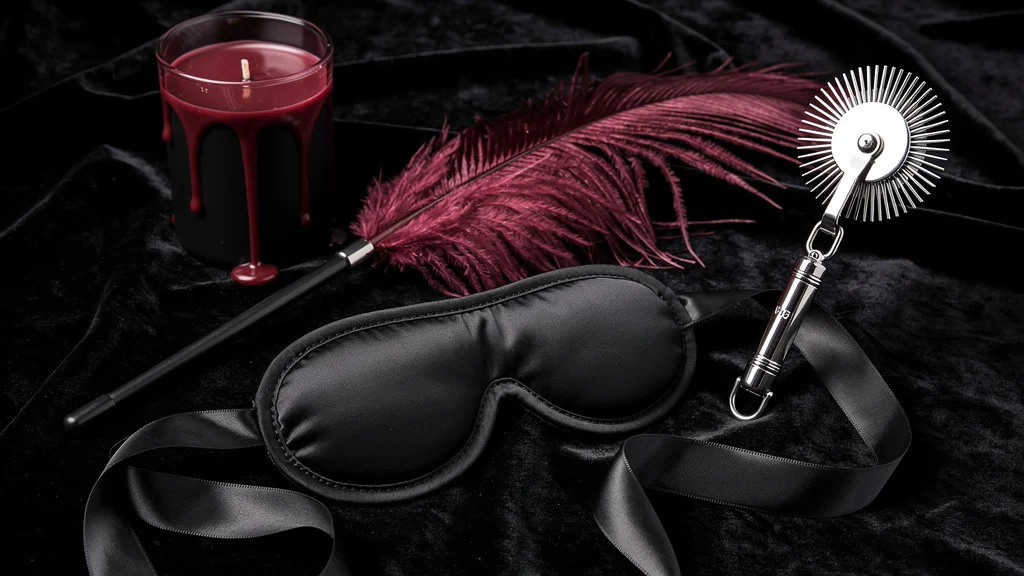
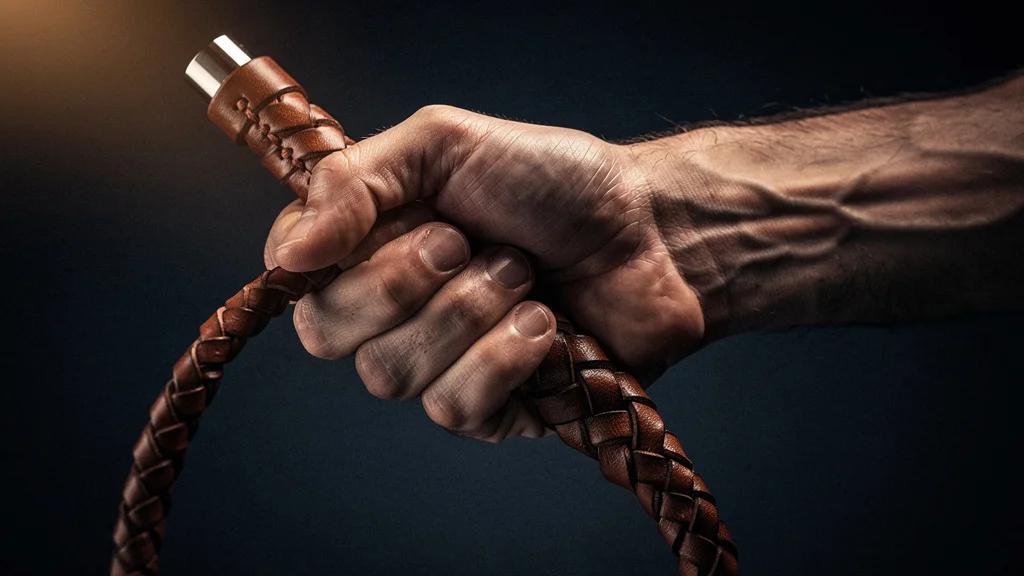
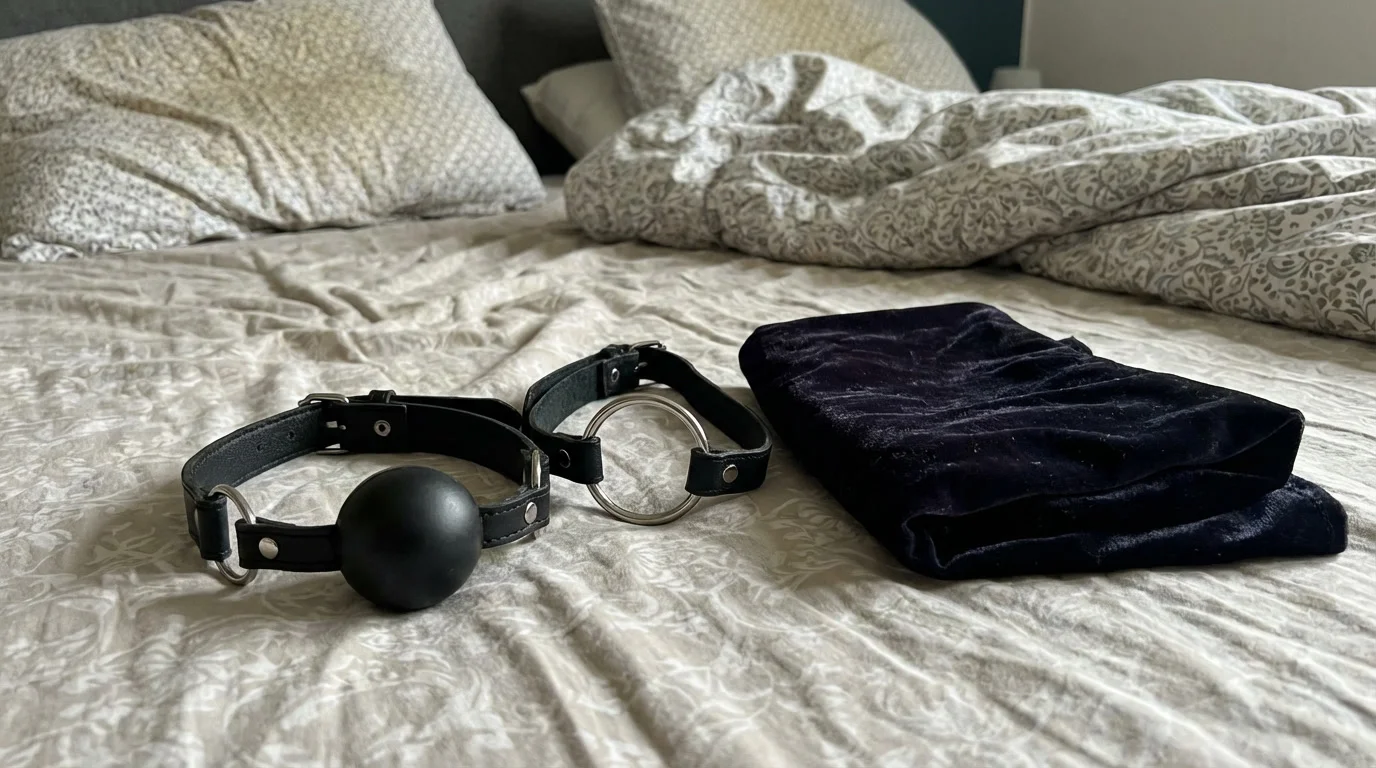
Bondage amplifies everything else in your arsenal:
Explore the Arsenal:
- ← Back to The Dominant’s Arsenal
- Sensory Play Guide — Blindfolds + restraints = profound vulnerability
- Impact Toys Guide — Combine bondage with impact play
- Gags & Silencing Guide — Silent and bound
Ready to discover your dominant archetype? Take the quiz — 5 minutes to understand which restraints will feel like extensions of who you already are.