 Sir Linus
The Problem
You’ve been there. Late at night, searching “best flogger for beginners” or “BDSM equipment guide.” What did you find?
Lists. Endless lists. “Top 10 Floggers 2024.” “Best Paddles Under $50.” Amazon reviews from someone who bought it last week, tried it once, and gave it five stars because it arrived on time.
Here’s what those lists won’t tell you: the people writing them aren’t choosing products for you. They’re choosing products that pay them the highest commission. That $29 flogger with 4.5 stars? It’s there because someone makes 15% when you click “Buy Now.” Not because it’s what your dominance needs.
So you buy it. The cheap leather that smells like a factory. The handle that doesn’t feel like an extension of your hand. And you wonder why it feels like you’re playing a role instead of expressing who you are.
The Fantasy Factory sold you the costume and called it the character.
They gave you a script that says: Buy equipment → Become a Dominant. As if a flogger is a magic wand. As if the right paddle unlocks authority you don’t yet have.
But equipment doesn’t create dominance. It never did.
The dominance was already there. Caged, perhaps. Waiting to be unleashed. But there.
That flogger in your Amazon cart? It’s not going to transform you. It’s not going to make your partner submit. It’s not going to give you the confidence you’re searching for at 2 AM.
It’s just a tool. And tools are worthless without the hands that wield them — hands that already know what they want to say.
And there’s another lie, quieter but just as destructive: the belief that more expensive means more legitimate.
You see the handcrafted single-tail whip. The professional-grade suspension rig. The $400 leather flogger with hand-stitched braiding. And somewhere in your mind, a voice whispers: That’s what a real Dom uses.
So you reach for equipment that matches who you want to become — not who you actually are right now.
But authenticity doesn’t come from premium leather. It comes from choosing what fits your dominance, at this moment in your journey. A $50 paddle wielded with intention speaks louder than a $300 flogger you bought to look the part.
The Underground knows this. The Pretenders don’t.
Start where you are. Not where the Fantasy Factory says you should aspire to be.
The Flip
Here’s the truth the Fantasy Factory doesn’t want you to know: a flogger doesn’t create a Dominant. It reveals the one already within you.
The equipment guides have it backwards. They treat tools like transformation devices — as if the right paddle unlocks authority you don’t yet have. As if “graduating” from a soft flogger to a cane means you’ve leveled up as a Dominant.
This is the same lie, different costume.
Your dominance already exists. It’s not something you purchase or earn through equipment progression. The question was never “what should I buy to become a better Dom?” The question is: what does your dominance want to express?
Think about it. An Enforcer’s dominance speaks through impact — direct, physical, memorable. A Mindbender barely needs equipment at all; their authority lives in the space between words, in anticipation, in psychological precision. A Ritualist treats every tool as ceremonial — the quality and meaning matter more than the function.
These aren’t skill levels. They’re signatures.
Your archetype determines your tools, not the other way around. A Ruler doesn’t need to “work up to” a cane because it’s “advanced.” They might choose never to use one because it doesn’t match their dominance language. Meanwhile, a Sensualist might gravitate toward multi-tail floggers from day one because rhythm and building sensation is how their authority speaks.
Stop asking “what’s best for beginners.” Start asking “what’s best for me?”
The equipment you choose should feel like an extension of who you already are — not a costume you’re trying to grow into. When you hold the right tool, something should click. Not “this is what a Dom uses,” but “this is how I speak.”
That’s the flip. Equipment as expression, not transformation.
Impact as Language
Forget everything the Fantasy Factory taught you about impact play.
It’s not a skill tree. There’s no “beginner” tier you climb through, graduating from soft to hard like you’re collecting achievements. That framework exists because it’s easy to sell — not because it’s true.
Here’s a better frame: Impact is a language.
Every tool speaks differently. Not better or worse — differently. The question isn’t “what’s more advanced?” It’s “what do I want to say?”
Understanding Sensation: Thuddy vs Stingy
Before you choose your words, understand the two fundamental dialects of impact: thud and sting.
Thuddy is the deep conversation. The kind that resonates below the surface. It’s open palms, wide floggers, padded paddles, and leather-wrapped jacks. The sensation spreads — dull, warm, building slowly. Thud speaks to muscles, to tissue, to endurance. It’s the Enforcer’s sustained pressure. The weight that reminds: I’m here. I’m not going anywhere.
Stingy is the sharp remark. Surface-level but impossible to ignore. It’s canes, crops, whips, and narrow-fall floggers. The sensation concentrates — bright, immediate, electric. Sting speaks to nerve endings, to attention, to precision. It’s the Commander’s exclamation point. The snap that says: Pay attention. Now.
Neither is more advanced. Neither is “harder.” They’re different vocabularies.
Some Dominants discover their voice is entirely thuddy — they never need sting to say what they mean. Others find precision in sharp sensation, rarely reaching for impact that spreads. Most speak both, code-switching between thud and sting depending on what the moment requires.
The question isn’t which is better. It’s which feels like you speaking.
The Open Palm: A Whisper
Your hand knows your partner’s skin better than any implement ever will. The open palm speaks intimacy. Connection. Warmth. It’s not “for beginners” — it’s for moments when words are too much and leather is too cold. The palm whispers: I’m here. I feel you. You’re mine.
Some Dominants never need more than this. And that’s not limitation — it’s fluency.
The Flogger: A Paragraph
The flogger builds. It tells a story. Rhythm, momentum, crescendo. Where the palm whispers a word, the flogger writes a paragraph — sentence by sentence, building intensity without ever losing the thread.
This is the tool of the Sensualist. The Dominant who understands that impact isn’t about single moments but about the arc. The flogger speaks in sustained conversation.
But not all floggers speak the same paragraph.
The material you choose shapes the conversation entirely. This is where the Fantasy Factory fails you again — they sell “leather floggers” as if leather is a single thing. It’s not.
Suede is soft diplomacy. Mixed thud and sting, forgiving, accessible. This is the flogger that builds confidence — yours and theirs. It teaches rhythm without severity.
Oiled leather is the formal declaration. Stiff falls, severe sting. Every swing means what it says. The intermediate step between soft and uncompromising.
Elk leather finds the middle ground. Medium thud, light sting. Perfect for warm-ups, for building toward something more intense. The bridge between beginning and escalation.
Deer leather is the whisper after the shout. Very light, very soft. This is your cool-down tool, the gentle return after intensity. Some sessions end here. Some begin here and never leave.
Rabbit fur barely qualifies as impact — it’s almost pure sensation. The softest option, tactile rather than painful. For Dominants who speak in textures as much as force.
Buffalo leather is the heavyweight. Very thick, very heavy falls. Deep thud, minimal sting. This speaks in resonance — impact you feel in your chest, not just on your skin. Advanced not because it’s “harder to use” but because it requires a partner who can handle depth over sharpness.
Fabric floggers are the accessible entry point. Pain-minimizing, beginner-friendly, affordable. Don’t dismiss them as “not real” — they’re real enough to teach technique, to explore rhythm, to discover if flogging is your language at all.
Rubber floggers occupy a practical space. Easy to sterilize, moderate intensity, straightforward to clean. The pragmatist’s choice.
Technical details matter too:
- Fall width: 1” falls deliver heavy thud. ¼” falls deliver sharp sting. Width is sensation.
- Fall quantity: 10-20 falls give you precision and control. 40+ falls create a diffuse, cushioning effect. Quantity is focus.
The Fantasy Factory wants you to believe you “graduate” from fabric to leather to rubber to buffalo. That’s backwards. You choose the material that says what you want to say. A Sensualist might start with deer leather and never need anything heavier. An Enforcer might reach for buffalo on day one because that resonance is their native tongue.
The tool doesn’t make you. You choose the tool that already fits who you are.
The Paddle: An Exclamation
The paddle doesn’t ask. It declares.
Where the flogger builds, the paddle punctuates. It’s the exclamation point in your scene — decisive, authoritative, unmistakable. The Enforcer’s voice. The Commander’s emphasis.
This is what I said. This is what I meant. There’s no ambiguity here.
Here’s what most guides won’t tell you: the material of your paddle matters far less than its features.
The Fantasy Factory loves to sell you on premium materials — hand-carved oak, Italian leather, aerospace-grade acrylic. And yes, different materials feel different in your hand. But research shows that features — holes, padding, thickness — impact sensation far more than whether your paddle is oak or acrylic.
Holes increase sting by 70-90%. They reduce air resistance, making each impact faster, sharper, more concentrated. A paddle with holes bites. This is for Dominants who want their emphasis immediate and electric.
Padding increases thud by 85-96%. It distributes impact over a larger area, turning sharp into dull, sting into resonance. A padded paddle speaks in waves, not spikes. This is for Dominants who want their authority felt deep.
Thickness changes flexibility. Thin paddles (¼”) flex more, creating a stingier sensation. Thick paddles (1”+) stay rigid, delivering heavier thuds. The difference isn’t about “better” — it’s about whether you want your impact to snap or to settle.
So don’t obsess over whether to buy oak or leather. Ask instead: Do I want holes? Padding? Thickness? What combination expresses what I’m trying to say?
The right features matter more than the right material. The right authority is what you already carry.
The Crop: A Comma
The crop guides. Corrects. Directs attention. It’s the comma in your sentence — “not here, here.” The tool of precision, of training, of teaching.
The Guide reaches for this. Every tap is a lesson. Every correction, a refinement.
The Cane: A Period
The cane ends conversations.
It speaks with precision and severity. There’s finality in its voice — the period at the end of a long sentence, the moment when everything said before arrives at its conclusion.
This isn’t “advanced.” It’s specific. The Ritualist chooses it for ceremony. The edge-explorer chooses it for intensity. The choice isn’t about skill — it’s about what you’re trying to say.
The Slapper: An Underline
Also called jacks, batons, or thumpers — these are leather-wrapped sticks with a hard core. They occupy a unique space in the arsenal.
The slapper delivers heavy thud with precision. Where a paddle spreads impact across a wide surface, the slapper concentrates that depth into a smaller area. It’s the underline beneath a word you want to emphasize twice.
This is impact that resonates. That settles into muscle tissue. That makes a point and then makes it again.
The Enforcer who wants focused intensity reaches for this. The Guide who wants to emphasize a specific lesson. It’s not commonly discussed in mainstream guides, but it’s a staple in experienced arsenals for good reason: it does what nothing else does quite the same way.
The Dragon Tail: An Ellipsis
Somewhere between flogger and whip, the dragon tail creates suspension. Anticipation. The pause before the next thought.
Fewer falls than a flogger, heavier and more focused. Not quite the singular intensity of a single-tail whip, but more concentrated than flogging. The sensation is mixed — thud and sting in conversation with each other.
This is the bridge tool. The one that teaches Dominants about whip-like tools without the steep learning curve of single-tails. The one that expands your vocabulary without requiring expert-level fluency.
Some Dominants discover the dragon tail is exactly the sentence they’ve been trying to speak. Others use it as stepping stone toward whips. Either way, it’s its own voice — not a beginner’s placeholder, but a legitimate statement.
The Whip: An Exclamation Point in Bold
Single-tail whips — bull whips, snake whips, signal whips — are not toys. They’re commitments.
They speak in crack and intensity. In fear and respect. In the kind of sensation that breaks skin if you’re not precise. This is impact that demands extensive training, dedicated practice, and absolute control.
Do not purchase a whip because it looks powerful. That’s costume thinking. Purchase a whip because you’ve trained with it, because you understand distance and angle and wrap prevention, because you know exactly what it can do and exactly how to prevent what you don’t want it to do.
The whip is the exclamation point in bold at the end of a declaration written in fire. It’s not more advanced than other tools — it’s more specific, more demanding, more unforgiving of mistakes.
Most Dominants never need a whip. Their authority speaks perfectly well in other dialects. If you do reach for one, do it with training, respect, and absolute clarity about why this tool and no other.
The Household Item: A Found Poem
Wooden spoons. Rulers. Hairbrushes. Belts.
These aren’t lesser tools. They’re accessible ones. The found poetry of impact play — ordinary objects that become extraordinary in context.
A wooden spoon delivers decent thud. A ruler offers sharp sting. A hairbrush combines both depending on which side you use. A belt folds into thud or snaps into sting depending on how you wield it.
The Underground knows this: dominance isn’t about $200 implements. It’s about intention. A $3 wooden spoon wielded with authority speaks louder than a premium paddle purchased to look the part.
Safety note: Household items can break. Inspect before use. Wooden spoons can splinter, rulers can crack, hairbrushes can shatter. That’s the trade-off for accessibility — you gain affordability and lose industrial durability.
But for discovering whether impact is your language? For exploring before investing? For Dominants who understand that equipment doesn’t create authority?
These work. They’ve always worked.
So ask yourself: What does your dominance want to say?
Not “what should a beginner use.” Not “what’s the progression.” Ask: What feeling do I want to create? What conversation do I want to have?
That question — not any buying guide — will lead you to the right tool.
Your Archetype, Your Arsenal
Your dominant archetype shapes your arsenal. Not as rules, but as natural affinities — the tools that feel like extensions of who you already are.
The Enforcer gravitates toward impact that leaves an impression. Heavy leather paddles, quality floggers with weight behind them. Their equipment speaks in exclamation points.
The Guide collects versatile tools that can teach — implements that offer range, from gentle correction to firm reinforcement. Every session is a lesson; every tool, a teaching aid.
The Mindbender often needs the least equipment. A single blindfold. Perhaps restraints. Their real tools are anticipation, words, and the spaces between touch. The physical implements are almost props for the psychological scene.
The Commander invests in quality over quantity. Fewer pieces, but each one chosen with intention. Authority symbols matter: collars with weight, cuffs that mean something.
The Ritualist treats equipment as ritual objects. The presentation matters as much as the function. Ceremonial leather, pieces with history, tools that participate in the protocol rather than just serving it.
Don’t know your archetype yet? Take the quiz — in 5 minutes, you’ll understand which of these resonates with your natural dominance.
Once you know who you are, come back. The Arsenal guides will show you exactly how your type speaks through equipment.
Safe Zones and Danger Zones
Impact play requires precision — not just in technique, but in target. Your partner’s body isn’t a uniform canvas. Some areas accept impact safely. Others don’t.
Safe zones are areas with muscle padding and minimal risk of organ or nerve damage:
- Buttocks — The primary target. Well-padded, designed to handle impact, large surface area for mistakes.
- Upper back — Below the shoulder blades, avoiding the spine. Muscle coverage protects what’s underneath.
- Thighs — Front and back, avoiding the sensitive inner thigh. Solid muscle tissue.
These zones aren’t invincible. You can still cause harm with excessive force or careless aim. But they’re designed to absorb impact better than anywhere else on the body.
Danger zones are areas you avoid entirely — places where impact risks serious injury:
- Spine, neck, and tailbone — Bony prominences with nerves underneath. Never.
- Kidney area — Lower back, sides. Organs don’t bounce back from blunt force.
- Joints — Knees, elbows, ankles. Fragile structures, permanent damage potential.
- Head and face — This should be obvious. It’s not.
- Lower abdomen — Organs again. Avoid.
The Fantasy Factory sells you impact play as if bodies are simple. They’re not. Learn anatomy before you learn equipment. Know where muscle protects and where bone exposes. Understand what happens when you miss your mark.
Your dominance doesn’t excuse ignorance. Authority includes responsibility.
Aftercare: What Happens After Impact
Impact leaves marks — physical and psychological. Aftercare addresses both.
Immediate (0-30 minutes)
Skin inspection. Look for cuts, excessive bruising, welts that seem disproportionate to what you did. Most impact creates expected marks. Some creates concerning ones. Know the difference.
Ice if needed. Severe welts benefit from 15 minutes of cold. Not every session requires this. When it does, use it.
Hydration. Intense sensation depletes. Water helps.
Emotional check-in. Not a performance review. A genuine question: How are you? Listen to the answer.
Mark Duration Guide
Different tools leave different timelines:
- Fabric floggers: Minutes to an hour. Barely there.
- Leather floggers: 1-6 hours. Temporary warmth.
- Paddles: 6-24 hours. A day’s reminder.
- Canes: 3-7 days. A week of memory.
- Whips: 7-14 days, potentially permanent if skin breaks. Scars are not trophies — they’re consequences of either intention or mistakes. Know which you’re creating.
These are guidelines, not guarantees. Bodies vary. Intensity varies. The same implement wielded differently creates different outcomes.
If marks last longer than expected, monitor them. If they worsen instead of fade, that’s a problem worth addressing.
Aftercare isn’t optional. It’s part of the scene, not separate from it. The Pretenders skip this step because they’re performing dominance, not living it. The Underground knows: how you finish matters as much as how you start.
The First Piece
Your first piece isn’t about being a beginner. It’s about making a declaration.
The Fantasy Factory teaches you to start small and “work up” — as if dominance is a skill tree you climb by purchasing progressively intense equipment. Start with a soft flogger, graduate to a paddle, eventually “earn” a cane. This is backwards. This is buying costumes in sequence and calling it character development.
Your first piece should be a statement about who you already are.
The Ritual of Selection
Before you buy anything, ask yourself: What does my dominance want to say? Not “what’s safest for a beginner” — that question assumes you’re not ready to be yourself yet. Ask instead: What tool would feel like an extension of who I already am?
Then hold it. Not in a store — online shopping doesn’t offer this — but at a kink event, in a workshop, from someone in your community. Hold different implements and notice what happens.
The wrong tool feels like a prop. Something you’d use because you’re supposed to, because the guides told you this is what beginners use. It’s the costume.
The right tool feels like a word you’ve been trying to say. Like a part of you that finally has a voice. You don’t have to justify it. You don’t have to explain why a “beginner” chose this. It simply fits.
That’s the only criterion that matters.
Some Dominants hold a flogger and feel nothing, then pick up a simple leather paddle and everything clicks. Some discover their voice through restraints, not impact. Some find that their palm, trained and intentional, says everything they need to say — and they never need more than that.
This is the beginning of your Arsenal. Not a shopping list. A discovery.
Combining Impact with Other Equipment
Impact play becomes more intense when layered with other arsenal categories:
Explore the Arsenal:
- ← Back to The Dominant’s Arsenal
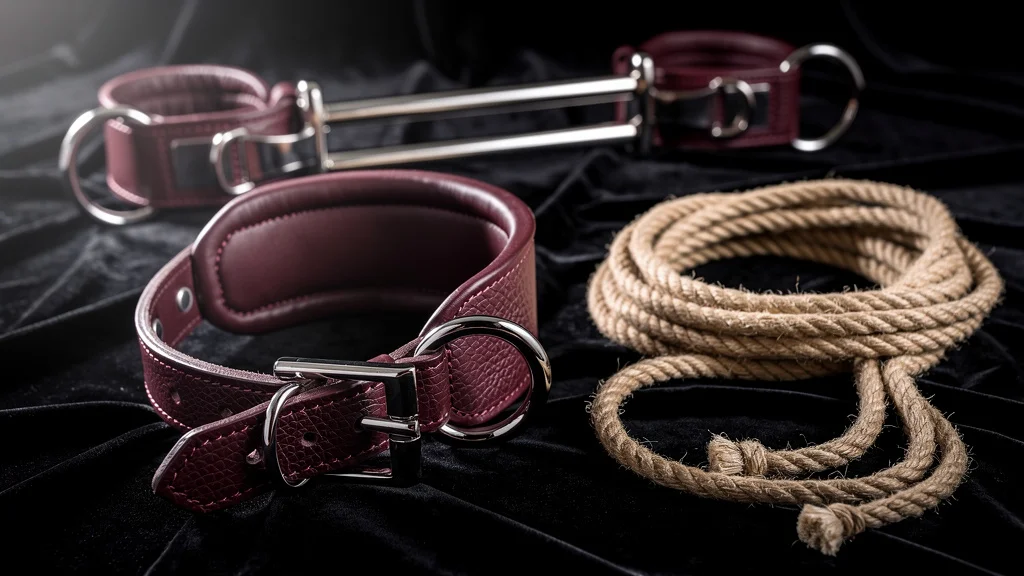
- Restraints & Bondage Guide — Combine impact with bondage
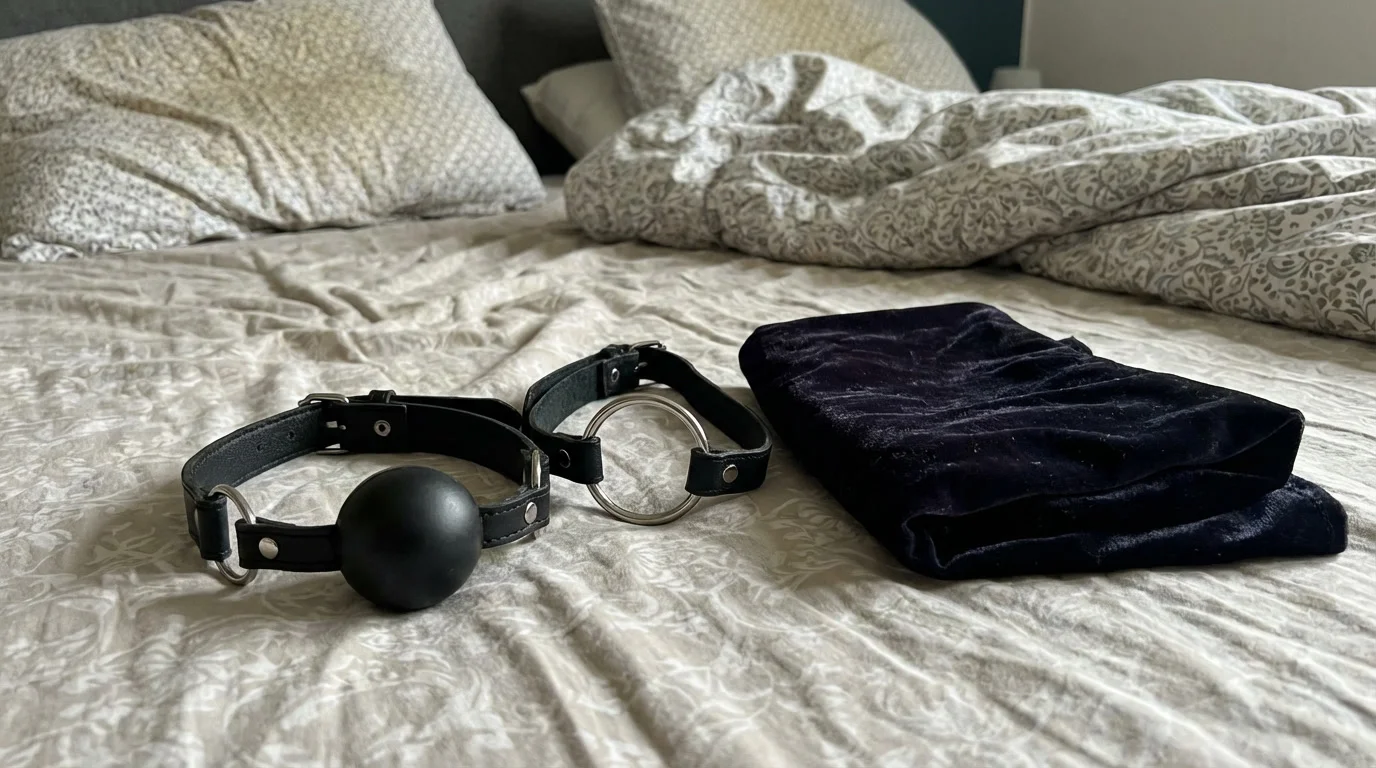
- Gags & Silencing Guide — Add silencing to impact scenes
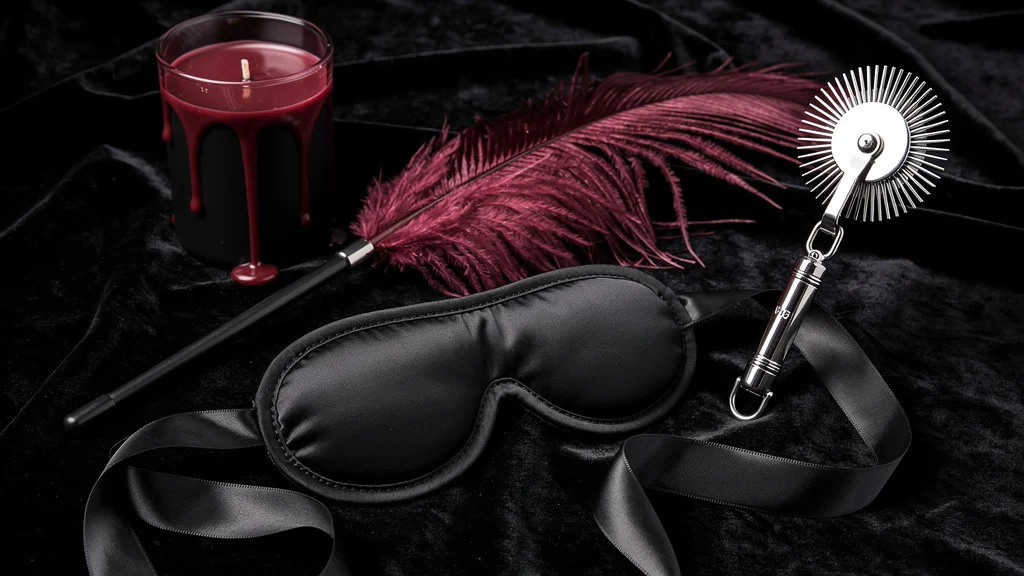
- Sensory Play Guide — Blindfolds + impact = intensity
Ready to discover your dominant archetype? Take the quiz — 5 minutes to understand how your authority naturally speaks.