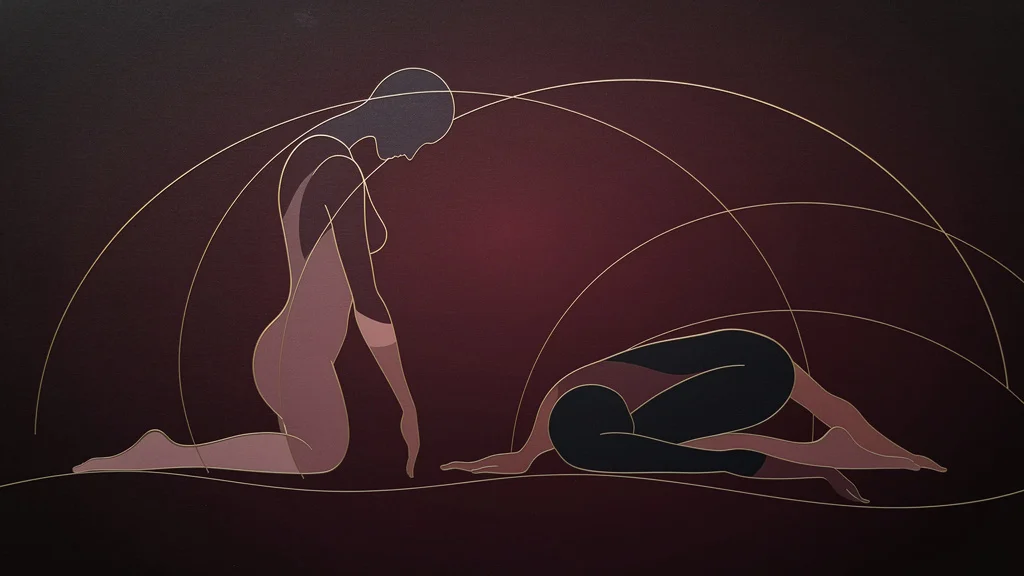
Positions aren’t just about aesthetics. Each one serves a purpose.
That’s the distinction most Doms miss when they start training these positions. They see them as performance — a way to make their submissive look a certain way, display their body, demonstrate their submission visually. All of that can be true. But it’s incomplete.
And for her: Submissive Positions: What Kneeling Does for You on Submissive Path — the same practice, explained to the one taking the position.
Submission poses are functional. They’re psychological tools. They’re communication methods. They’re gateways to headspace. They’re practical solutions to specific situations. When you understand the purpose behind each pose, you can deploy them strategically instead of arbitrarily.
A submissive kneeling isn’t just pretty. That position creates a specific physical state that encourages a submissive mental state. The body leads the mind. When they kneel, they drop. When they prostrate themselves, they access humility and worship. When they stand at attention, they become alert and ready.
This guide teaches you not just what the 12 essential positions are, but why they matter, how to teach them effectively, when to use each one, and how to customize them for your dynamic. This isn’t a museum catalog. This is a practical toolkit for building protocol that actually works.
Quick Answer: What Are These Positions?
These are structured physical positions a submissive assumes to enter and maintain a submissive headspace, demonstrate respect, and signal availability or readiness. The 12 essential positions every D/s dynamic should establish are: Kneel (Nadu), Present, Tower, Attention, Display, Prostrate, Rest, Bent Over, All Fours, Spread, Heel, and High Protocol. Each one has a specific psychological function — it’s not decoration, it’s architecture.
Why These Positions Matter
Submission poses are where the abstract concept of submission becomes concrete physical reality. They’re the bridge between the idea of a power dynamic and the lived experience of one.
Physical Expression of the Dynamic
When your submissive assumes a position you’ve taught them, they’re physically embodying the power exchange. Their body is literally taking a shape that demonstrates your authority. This isn’t metaphorical — it’s visceral.
Standing positions create alertness and readiness. Kneeling creates surrender and attentiveness. Floor positions create vulnerability. Each posture puts the body in a state that the mind recognizes and responds to.
You can tell someone “I’m in charge” a hundred times. Or you can teach them a position that makes that reality undeniable every time they assume it. The body doesn’t lie. When they’re on their knees looking up at you, the power dynamic isn’t a concept — it’s their lived reality in that moment.
Creates Submissive Headspace
Submission poses are one of the most reliable ways to shift someone into submissive headspace. They’re a physical trigger that creates a psychological response.
When a submissive who’s been properly trained assumes their pose, their mind follows their body. The act of kneeling initiates a cascade of associations and responses. They remember every time they’ve knelt before. They access the feelings associated with that posture. Their nervous system recognizes the pattern and responds accordingly.
This is why consistent use of the same positions matters. You’re creating conditioned responses. Over time, each posture becomes a shortcut to the mental state you want to create. One command — “Position” — and they’re there. Mind shifted, ready, submissive.
Some submissives struggle to drop into submission on demand. Submission poses solve that problem. You’re not asking them to feel submissive. You’re asking them to assume a specific physical posture. The feeling follows the form.
Practical Applications in Scenes
Submission poses aren’t just protocol exercises. They’re practical tools during actual scenes.
You need your submissive accessible for impact play? Bent Over pose. You want them vulnerable and exposed for sensation play? Spread pose. You’re binding them and need them stable? All Fours gives you access and stability. Each pose serves specific practical needs.
Good Doms think ahead. What will you need access to? What posture keeps them safe during this specific activity? Which position allows you to do what you’re planning while keeping them comfortable enough to sustain it for the required duration?
These positions are your scene architecture. They determine what’s possible, what’s safe, what works. Teaching them isn’t just about protocol — it’s about building the practical toolkit that makes your scenes function.
Protocol and Ritual Significance
Submission poses transform routine interactions into ritual moments. The submissive who kneels when you arrive home isn’t just greeting you. They’re participating in a ritual that marks the transition from vanilla day to D/s dynamic.
Ritual creates meaning. When the same pose happens in the same context repeatedly, it accumulates significance. The first time they kneel, it might feel awkward or performative. By the hundredth time, it’s sacred. It’s the marker that says “we’re in our roles now.”
Protocol poses — waiting poses, greeting poses, attention poses — create structure around everyday moments. They transform the mundane into the meaningful. Coming home becomes a ritual. Waiting for instruction becomes a meditation. Presenting themselves becomes an offering.
This is how you build a 24/7 dynamic that actually functions. Not through constant intense scenes, but through small ritualized moments woven throughout normal life. Submission poses are the threads you weave with.
Non-Verbal Communication
Submission poses are a language. Once established, you can communicate complex instructions with minimal words.
“Nadu” means one thing. “Present” means another. “Prostrate” means something else entirely. One word conveys pose, attitude, and expectation. No explanation required. No ambiguity.
This matters during scenes when you don’t want to break the mood with lengthy instructions. It matters when you’re in public and need subtle communication. It matters when they’re in deep subspace and complex verbal processing is difficult.
You build this language together by assigning consistent names to each position and using them consistently. Over time, the vocabulary expands. You develop shorthand. Eventually, just a gesture or a look can indicate the posture you want. That’s fluency.
Meditative and Grounding Effect
Many submissives report that holding these positions — especially waiting poses — creates a meditative state. The body is still. The mind quiets. They drop into themselves.
This isn’t accidental. Sustained physical stillness naturally quiets mental chatter. When the body isn’t moving, the mind has less to track. Attention turns inward. The experience becomes almost meditative.
Some submissives use these positions as emotional regulation tools. When they’re anxious or overwhelmed, assuming a familiar posture grounds them. The physical familiarity creates psychological safety. Their body knows this shape. Their mind recognizes the pattern. They settle.
You can leverage this deliberately. Use waiting poses during aftercare for submissives who need to process internally. Use grounding poses when they’re emotionally activated and need to center. The pose becomes a tool for their wellbeing, not just your control.
The 12 Essential Positions
These are the foundational positions every Dom should know and most dynamics will use in some form. Learn these first. Master them. Then customize or add as your specific dynamic requires.
Kneeling Positions
Kneeling is the foundational submissive posture. Most position systems center on variations of kneeling because it’s psychologically potent, practically useful, and physically sustainable for most people.
1. Kneel (Nadu)
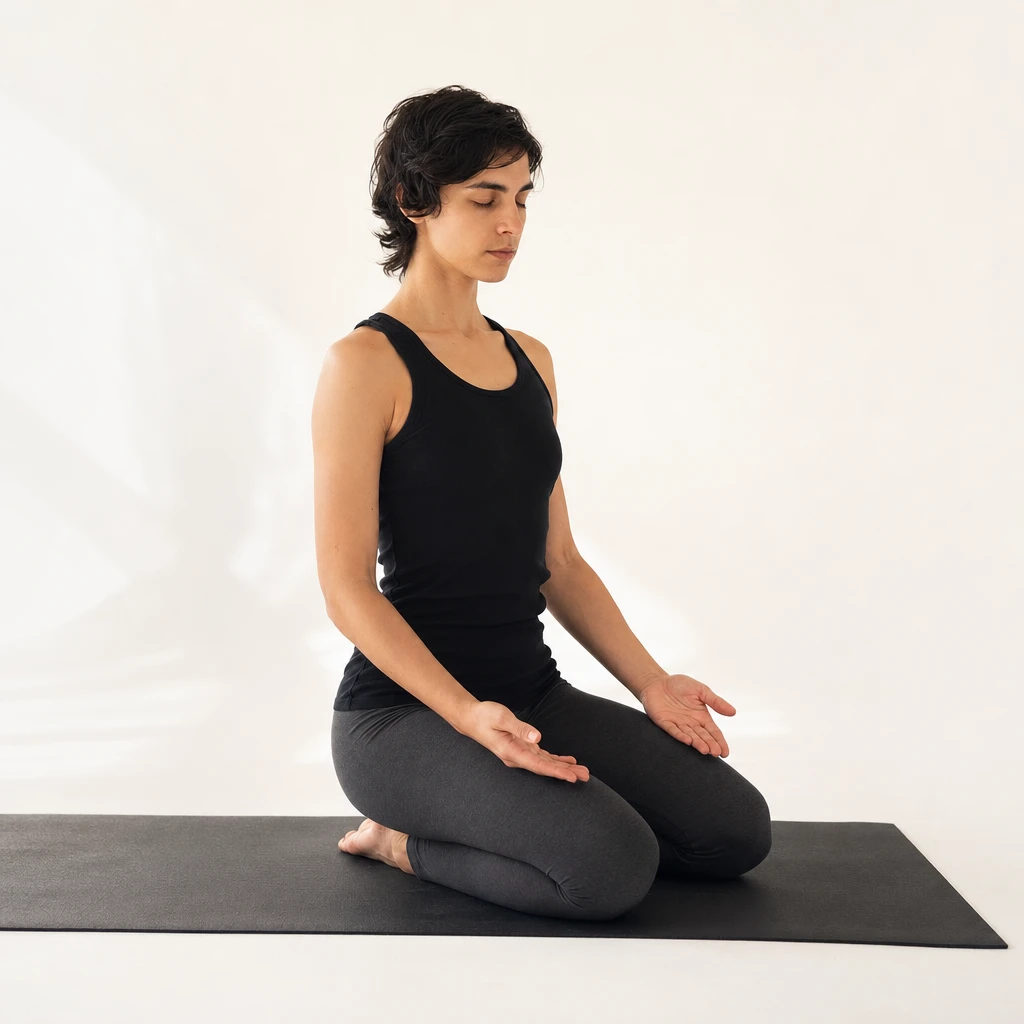
Position: Knees apart (typically shoulder-width or wider), sitting on heels, back straight, hands resting on thighs (palms up or down depending on your preference), eyes forward or downcast.
Purpose: This is the basic waiting and attention position. It’s where submissives rest when not actively engaged in a task but expected to remain available and attentive.
Variations:
- Palms up on thighs — receptive, open, waiting to receive
- Palms down on thighs — grounded, settled, composed
- Hands behind back — more formal, restricted, vulnerable
- Hands behind head — exposing, vulnerable, display-oriented
When to use: Starting position for most training sessions. Waiting for instruction. During protocol time when they should be available but not actively engaged. As a default pose they return to between tasks or activities.
Common mistakes: Not widening the knees enough (defeats the psychological purpose), letting posture collapse after the first few minutes, palms drifting without instruction. The wide knees with upright spine is the combination that creates the specific headspace — let one go and you’ve lost the pose.
The psychological impact comes from the wide knees (vulnerable, exposed, open) combined with the upright posture (attentive, ready, composed). It’s submissive but not degraded. Available but not desperate. This balance makes it versatile.
2. Present
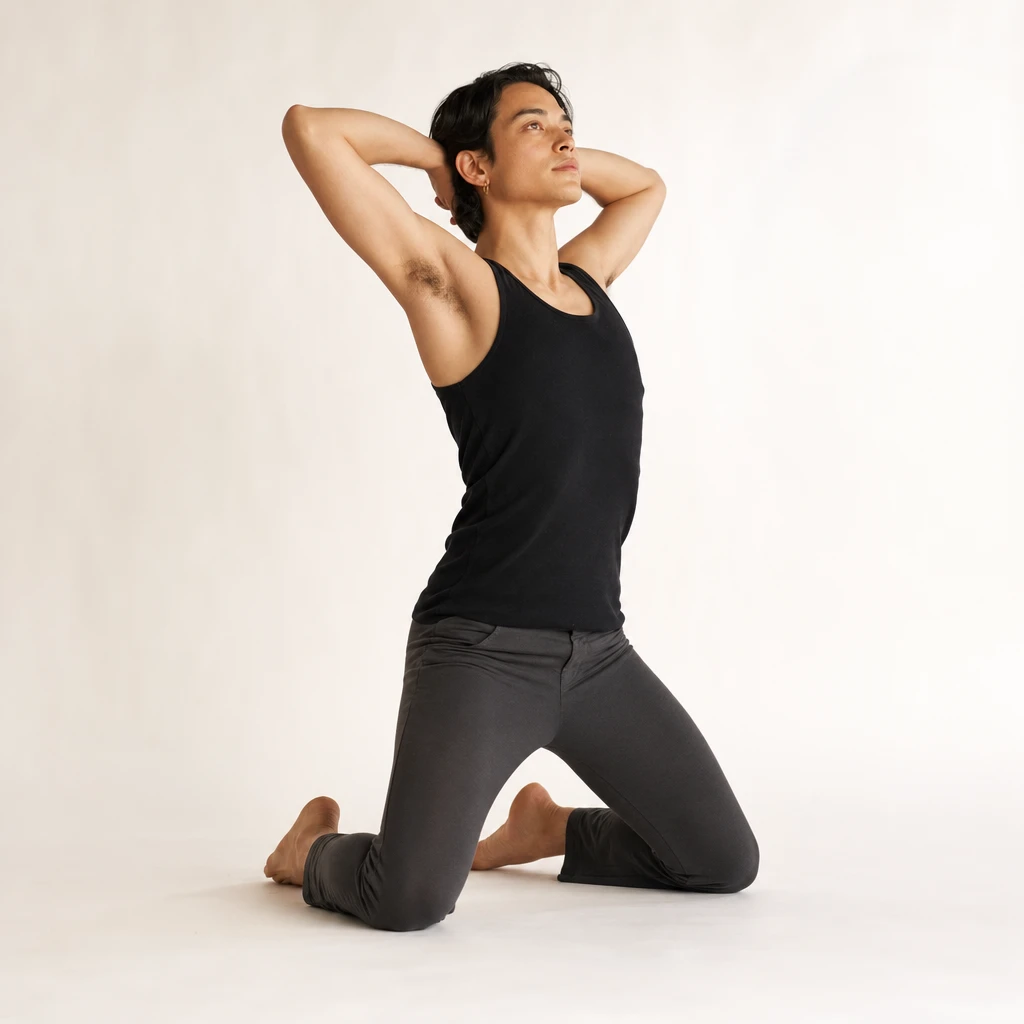
Position: Kneeling with knees wide apart, hands clasped behind head or behind back, chest pushed forward, back arched to display the torso, eyes forward or downcast as commanded.
Purpose: Offering the body for inspection, appreciation, or access. This is an explicitly vulnerable and exposing position designed to display and present.
When to use: Before scenes when you want to inspect them. When you want them to feel exposed and vulnerable. When granting access to their body. During punishment when you want them to feel the weight of your scrutiny.
Common mistakes: Letting the chest collapse back toward neutral posture, breaking eye downcast without permission, closing knees when the psychological intensity builds. This pose requires them to actively hold the openness — coach them to stay there.
Hands behind head versus behind back creates different energy. Behind head is more open and offering. Behind back is more restrained and controlled. Choose based on the mood you’re creating.
Many submissives report that Present makes them feel simultaneously vulnerable and powerful — vulnerable to your gaze, powerful in their willingness to offer themselves. That duality is part of what makes it psychologically rich.
3. Tower
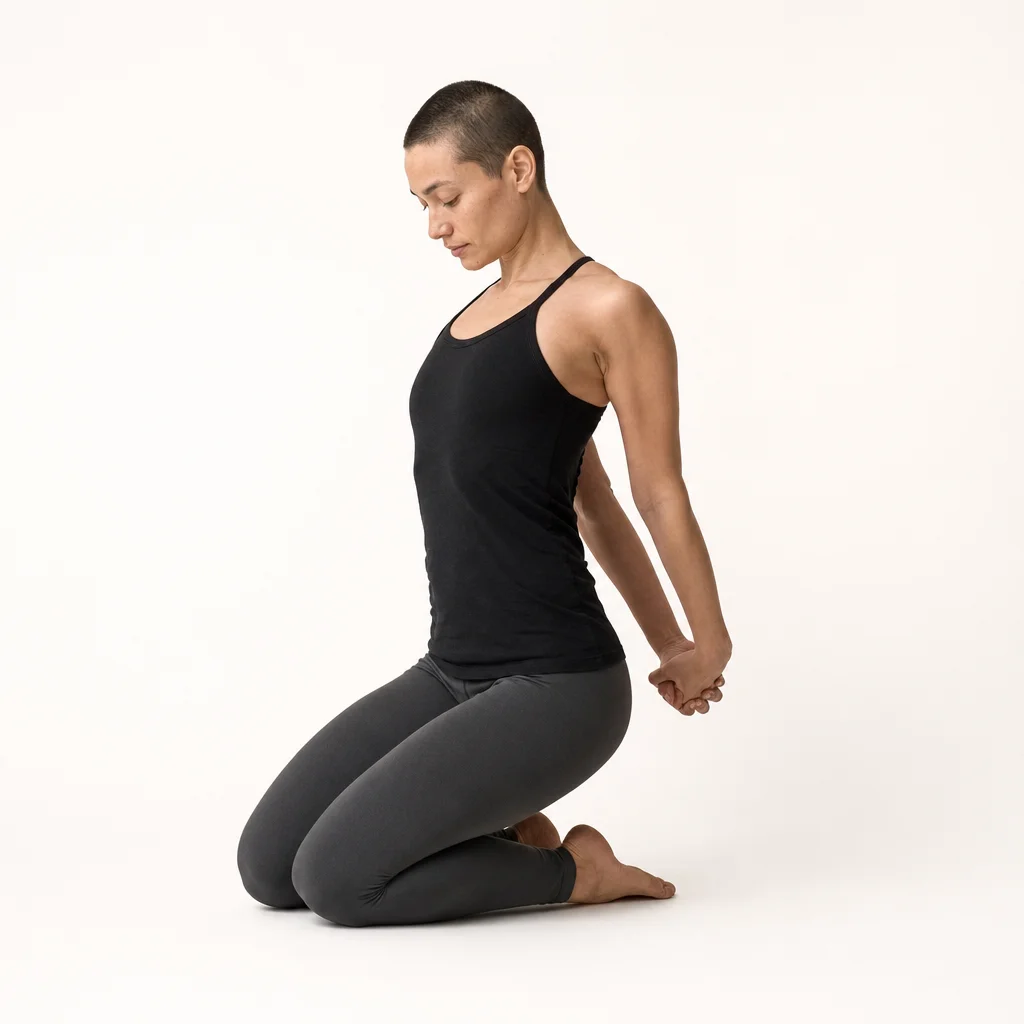
Position: Kneeling upright, not sitting back on heels, thighs vertical, hands at sides (palms against thighs) or behind back (clasped or held at small of back), back rigidly straight, eyes forward at your eye level or downcast as commanded.
Purpose: Maximum alertness and readiness. Tower requires more active muscle engagement than standard kneel, creating physical tension that translates to mental alertness.
When to use: When receiving important instructions. During formal moments of the dynamic. When you want them highly attentive and focused. As a more formal alternative to standard kneel.
Common mistakes: Sitting back onto heels when fatigued (that’s Nadu, not Tower), breaking the rigid back, letting the head drop. The physical difficulty is the point — if it’s easy, the posture has collapsed.
This position is physically demanding. The upright kneeling posture requires quad strength and balance. Most people can’t sustain it as long as standard kneel. Use it for shorter durations or for specific moments that require peak attention.
Standing Positions
Standing poses are necessary for many dynamics and scenes. They’re less obviously submissive than kneeling poses, so the submission comes through in the details — posture, hand placement, eye contact.
4. Attention
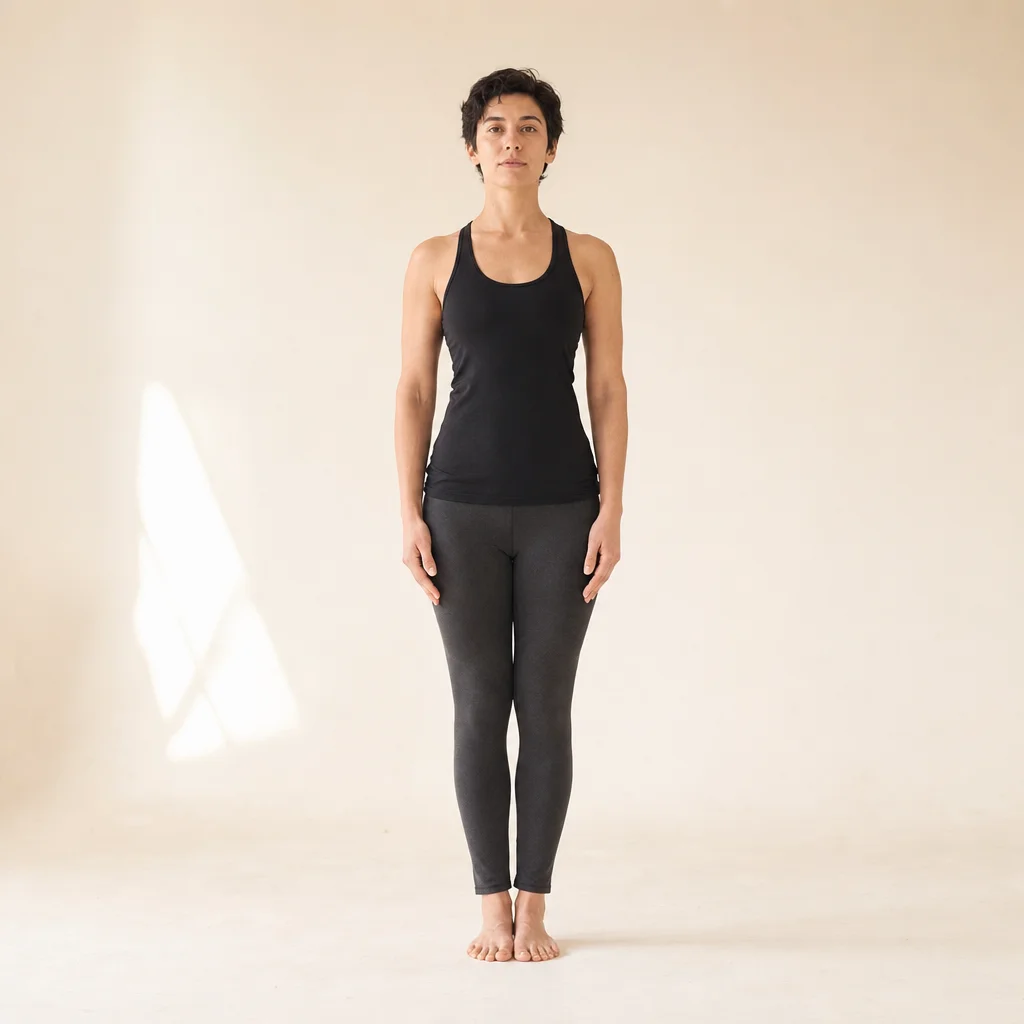
Position: Feet together or shoulder-width apart (specify which), hands at sides (palms against thighs) or behind back (clasped at lower back or small of back), shoulders back, back straight, eyes forward or downcast as commanded.
Purpose: Formal attention while standing. The standing equivalent of Tower — alert, ready, attentive.
When to use: When standing is required — in public, during scenes where kneeling isn’t practical, when you want them upright. For inspection while clothed. During protocol moments that require them to be mobile.
Common mistakes: Sloppy foot position, hands migrating forward, shoulders rolling in. The submission lives in the rigidity of the posture — let it go slack and it’s just standing.
Many submissives report that standing positions feel less obviously submissive, which makes them useful in semi-public situations. To an observer, they’re just standing. To you and them, they’re in position. This creates delicious secret-in-public tension.
5. Display
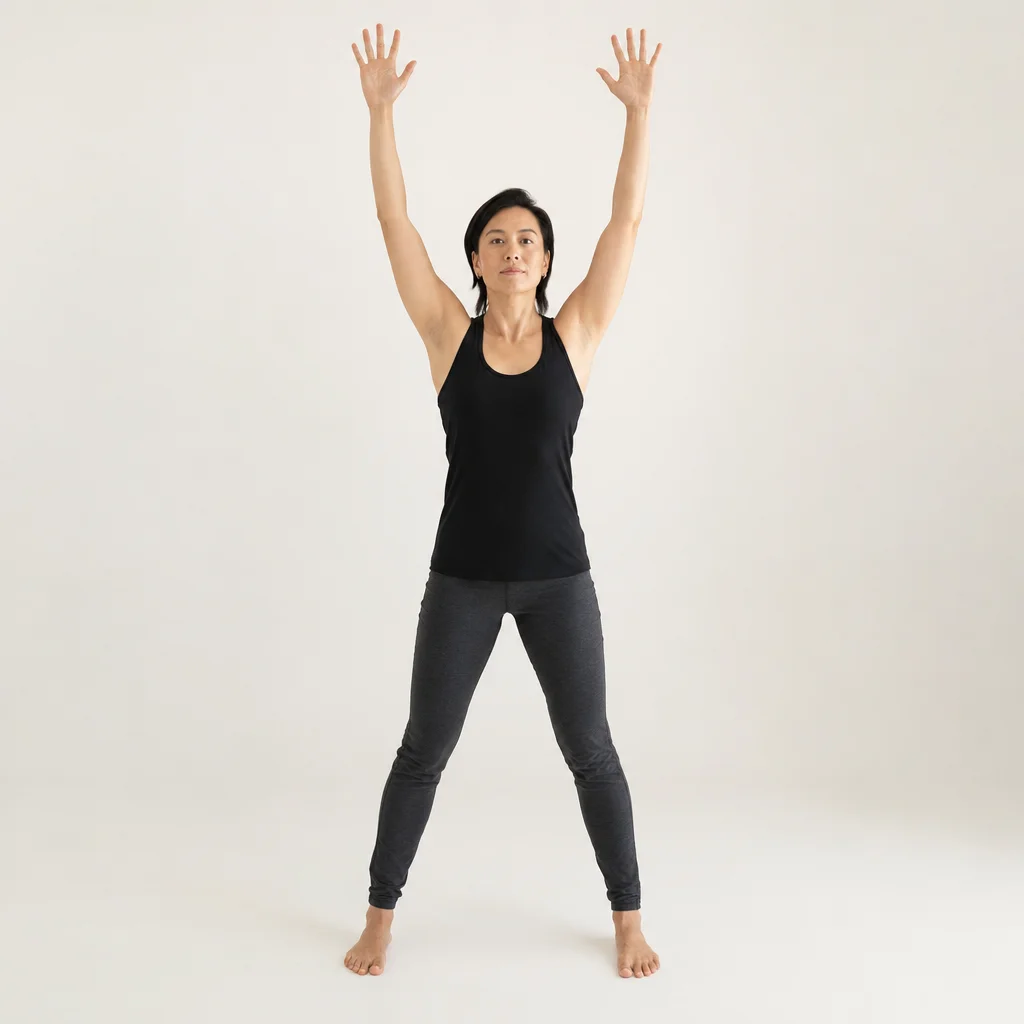
Position: Standing with legs apart (wider than shoulder-width), hands clasped behind head or held up and out, chest thrust forward, back slightly arched to present the body, eyes forward or wherever commanded.
Purpose: Standing version of Present. Full body display while upright. Vulnerable and exposing.
When to use: When you want full body access while they’re standing. For inspection before going out. When you want them to feel exposed and vulnerable but need them upright. During scenes that require standing access.
Common mistakes: Feet not wide enough, arms drifting down, the arch disappearing. The wide stance plus the exposed upper body is what creates the psychological weight — let either element go and you’ve lost the pose.
The wide stance creates instability — they have to engage their core to maintain balance. This physical engagement keeps them present in their body. Display is tiring; the arched back and engaged core fatigue quickly. Use for shorter durations unless building endurance is part of your training.
6. Heel
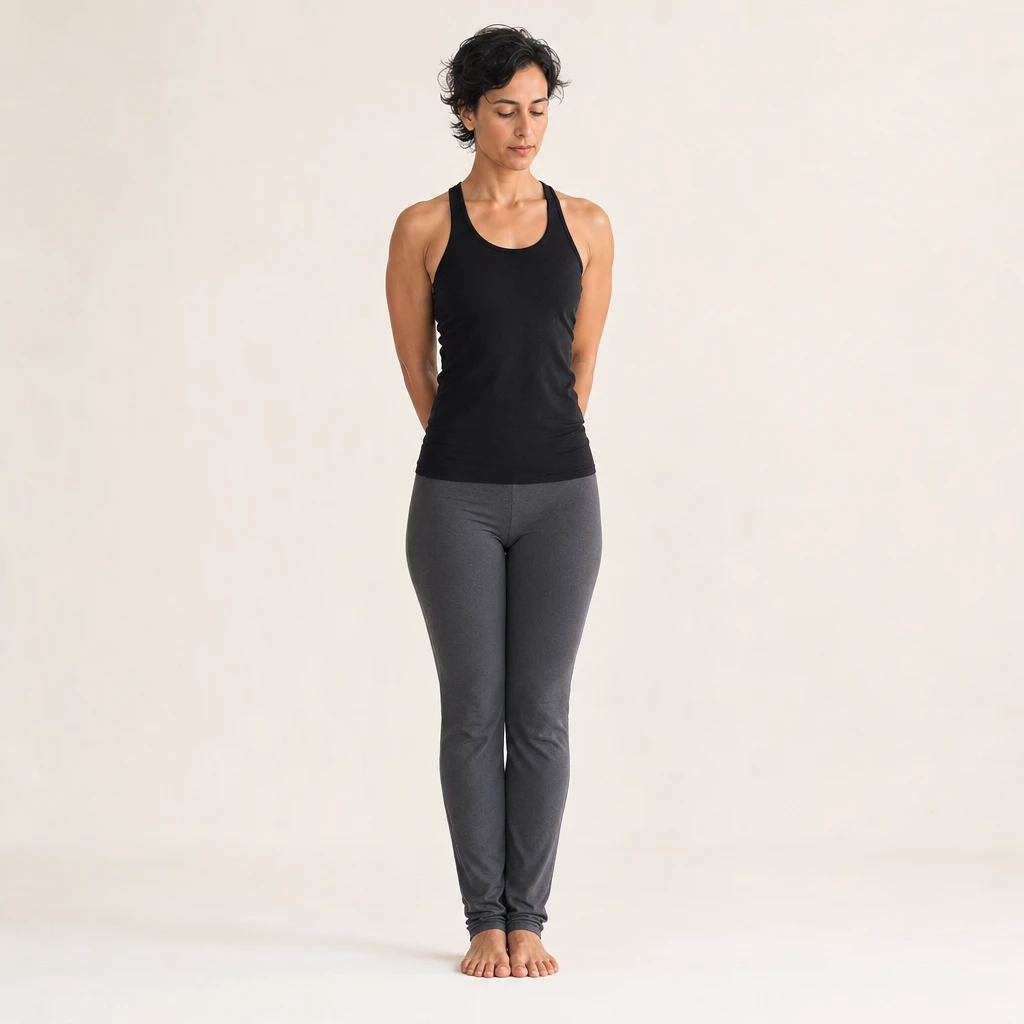
Position: Walking or standing directly behind and to the left (or right — establish which) of the Dominant, at a set distance (typically one step behind), eyes downcast or forward, hands clasped behind back or at sides.
Purpose: Protocol for movement together. Marks the power differential during navigation — they follow, you lead. Heel makes the hierarchy visible in motion.
When to use: Walking together in vanilla or semi-public spaces. Moving between rooms during protocol time. Any moment that requires them to follow you rather than walk beside you as an equal.
Common mistakes: Walking at your side instead of behind, variable distance that loses the structure, looking around instead of maintaining the submission posture while moving.
Heel is one of the most practically useful positions for 24/7 and protocol-heavy dynamics. It installs hierarchy into something as simple as walking through a grocery store. If you’re building a D/s dynamic with real protocols, Heel is non-negotiable.
Floor Positions
Floor poses are the most physically submissive. They put the submissive at the lowest level, often making eye contact impossible unless you lower yourself. Psychologically potent. Use deliberately.
7. Prostrate

Position: Lying face-down on floor, forehead touching ground, arms either extended straight forward (full prostration) or at sides (compact prostration), legs together or slightly apart, completely flat against the floor.
Purpose: Deepest physical submission. Worship position. Greeting high protocol Dominants. Expressing apology or asking forgiveness. Demonstrating ultimate surrender.
When to use: Greeting rituals in high protocol dynamics. Moments of worship or devotion. When you want them to feel the full weight of submission. After serious rule violations when they’re seeking forgiveness. In scenes that call for ultimate surrender.
Common mistakes: Lifting the head, not fully extending the arms in full prostration, treating it as casual. Prostrate is intense — if they’re breaking it, they’re not in it. The discomfort of full prostration is part of its psychological function.
Some submissives find this position profoundly moving — it accesses deep submission and can create cathartic emotional release. Others find it uncomfortable in ways that don’t serve them. Know your submissive. Not every position serves every dynamic.
8. Rest
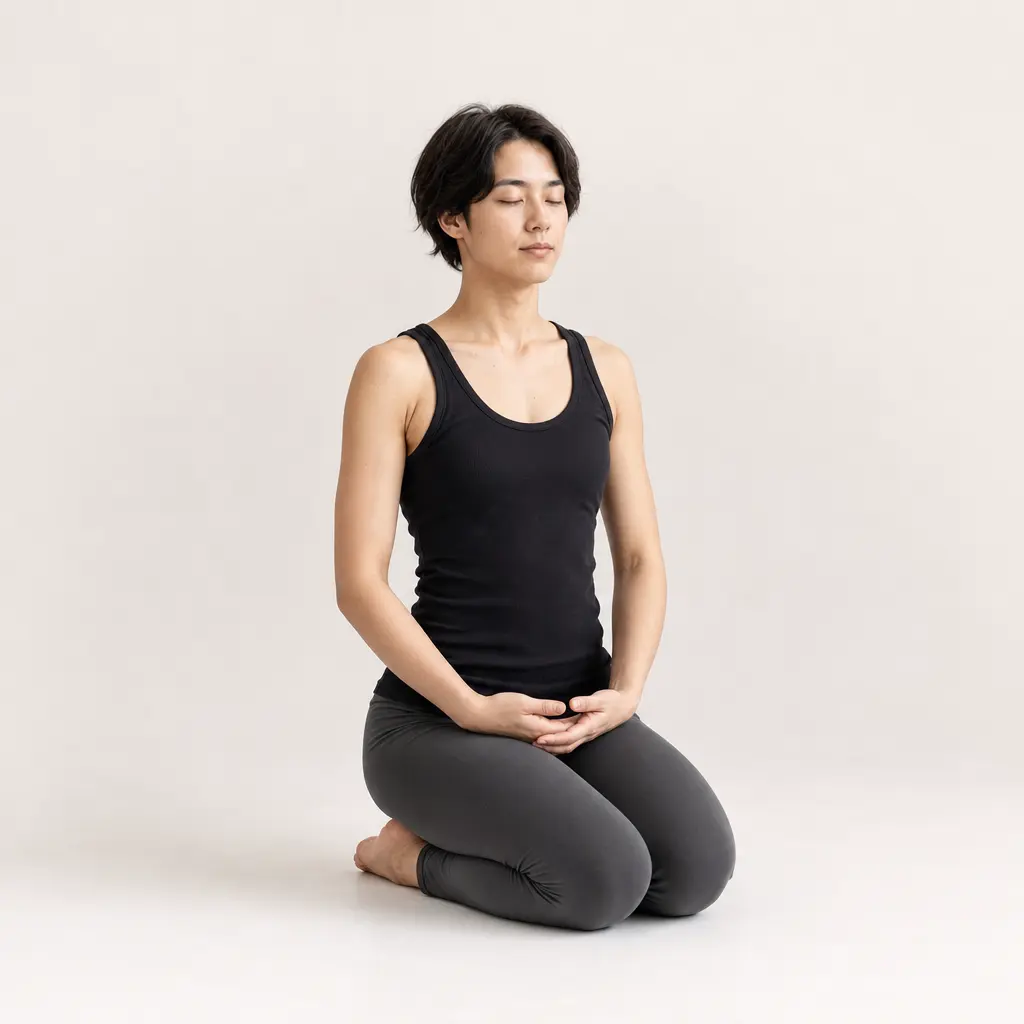
Position: Any comfortable floor position that allows them to relax while remaining attentive. Common versions: sitting cross-legged, sitting with legs to the side, lying on their side, curled at your feet.
Purpose: Recovery between protocol periods. Comfortable waiting during long scenes. Aftercare position. Demonstrates that protocol can include care and recovery.
When to use: Between intense protocol moments. During aftercare for submissives who find floor positions comforting. Long scenes where sustainable comfort matters. When you want them nearby but relaxed.
Common mistakes: Not defining what Rest actually means — letting it become formless. You need to specify whether they can shift positions freely, whether they need permission to move, what “rest” looks like in your dynamic.
Many Doms neglect Rest, thinking every position should be demanding. This is a mistake. Sustainable dynamics include recovery. Define it clearly so they know what’s expected even during downtime.
Scene-Specific Positions
These poses are task-specific. They’re designed for particular activities rather than general protocol.
9. Bent Over

Position: Bent at the waist, approximately 90 degrees, hands gripping ankles, edge of furniture, or braced against wall, legs straight or slightly bent, back can be flat or arched depending on your instruction.
Purpose: Access for spanking, impact play, anal play, or inspection. Vulnerable and exposing. Creates optimal angle for many impact activities.
Variations:
- Over knee (OTK) — across your lap, supported
- Bent over furniture — table, bed, bench for stability
- Standing bent — no support, requires core strength
- Hands against wall — vertical surface instead of horizontal
When to use: Spanking and impact scenes. Anal play requiring this angle. When you want them vulnerable but accessible. Inspection with a focus on lower body.
Common mistakes: Grabbing ankles when hamstring flexibility doesn’t allow it (causes instability and injury risk), letting knees buckle, not bracing properly. Allow bent knees or furniture support — function over form.
Bent Over puts blood rushing to their head during long scenes. Check in if using for extended periods. Have them rise slowly afterward to prevent head rush.
10. All Fours
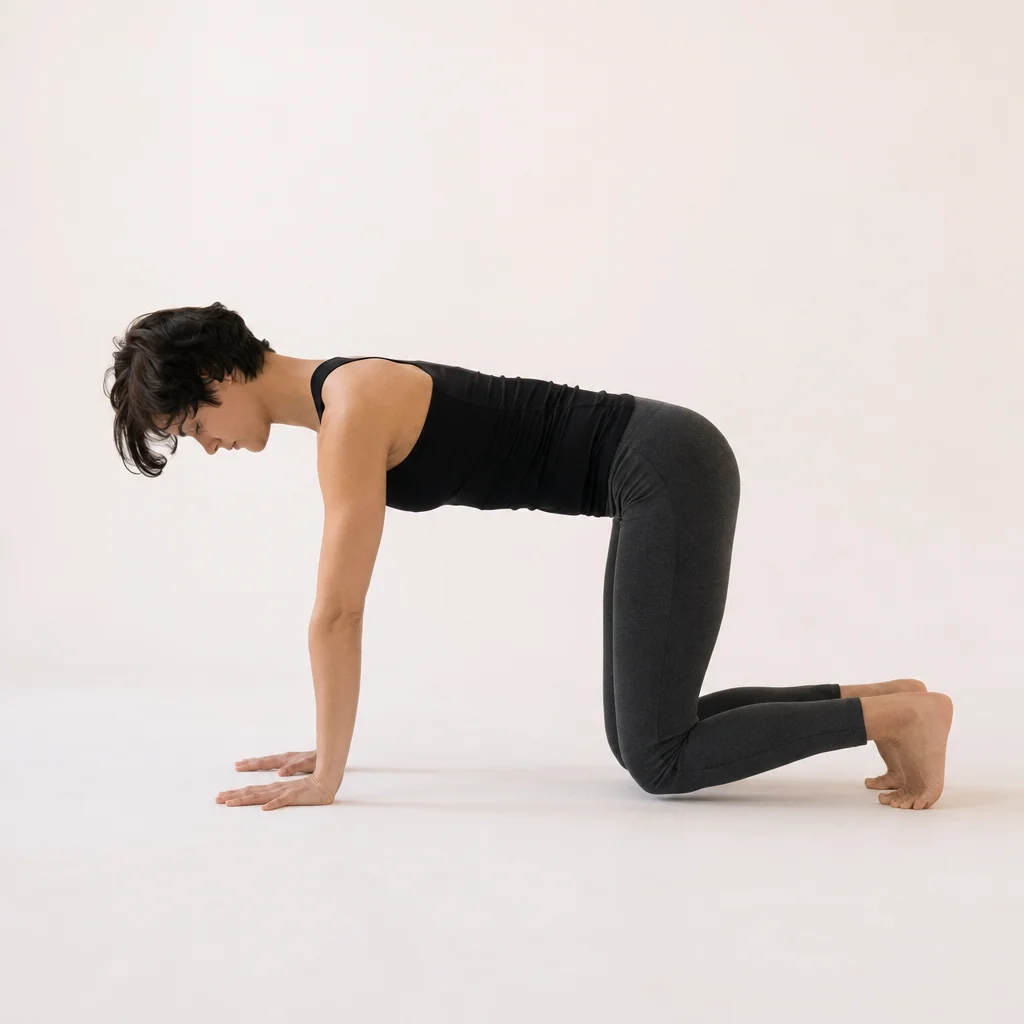
Position: On hands and knees, back flat or slightly arched, head up or down as commanded, knees typically hip-width apart, hands shoulder-width apart, weight distributed evenly.
Purpose: Versatile access position. Stable enough to sustain during impact play, bondage, or other activities. Can be used for pet play. Allows movement if commanded.
Variations:
- Chest down, ass up — face and chest to floor, hips elevated
- Full table — back completely flat, head aligned with spine
- Head down — forehead to floor, ass elevated
- Pet position — more relaxed, mobile version for pet play
When to use: Impact play requiring stability. Pet play scenarios. Bondage positions where you need them stable. Scenes requiring rear access. Positions you’ll maintain during activities.
Common mistakes: Wrists bent under instead of stacked, knees creeping together, back sagging into a bow. Wrist fatigue in particular ends scenes prematurely — have them shift to forearms (chest down) for extended use.
All Fours is more tiring than it looks. Wrists, shoulders, knees, and core all work to maintain it. Use padding under knees for longer scenes.
11. Spread
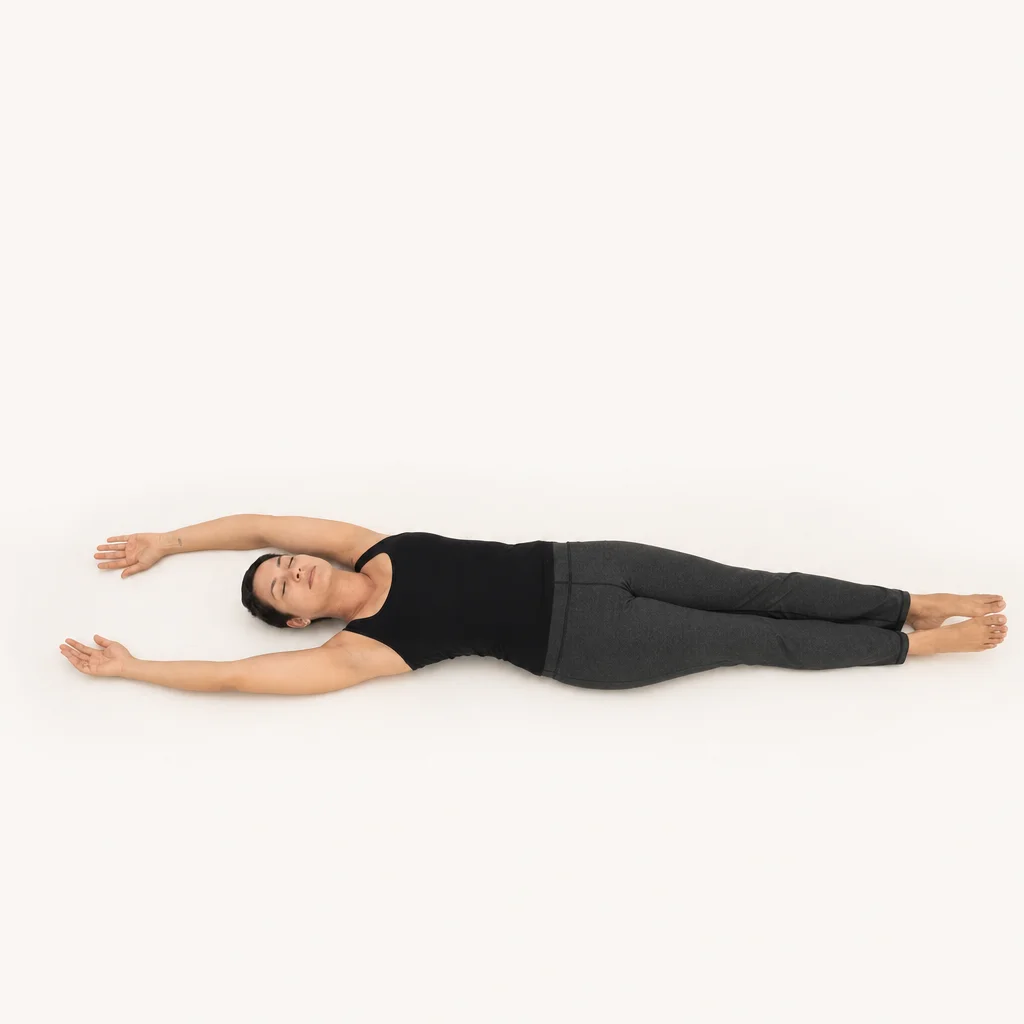
Position: Lying on back, legs spread wide (knees bent and falling outward or legs straight and apart), arms above head or out to sides, completely open and exposed, can be on floor, bed, or furniture.
Purpose: Maximum vulnerability and access. Sexual scenes, inspection, medical play, sensory play. The most exposing position for most people.
Variations:
- Legs straight spread — more tension, more difficult to sustain
- Knees bent, falling open — more relaxed, more sustainable
- Ankles restrained wide — enforced spreading
- Arms above head vs. out to sides — different vulnerability
When to use: Sexual scenes requiring access. Medical play scenarios. When you want maximum psychological vulnerability. Inspection focusing on genitals. Sensation play requiring stillness and access.
Common mistakes: Letting legs drift back together, arms moving from position without permission, breaking the stillness. If they can’t sustain it, use restraints — the pose serves a purpose and drift defeats it.
This is psychologically intense even when clothed. The wide-open posture hits vulnerability buttons hard for most submissives. Build trust before using it — Spread requires a solid foundation.
12. High Protocol
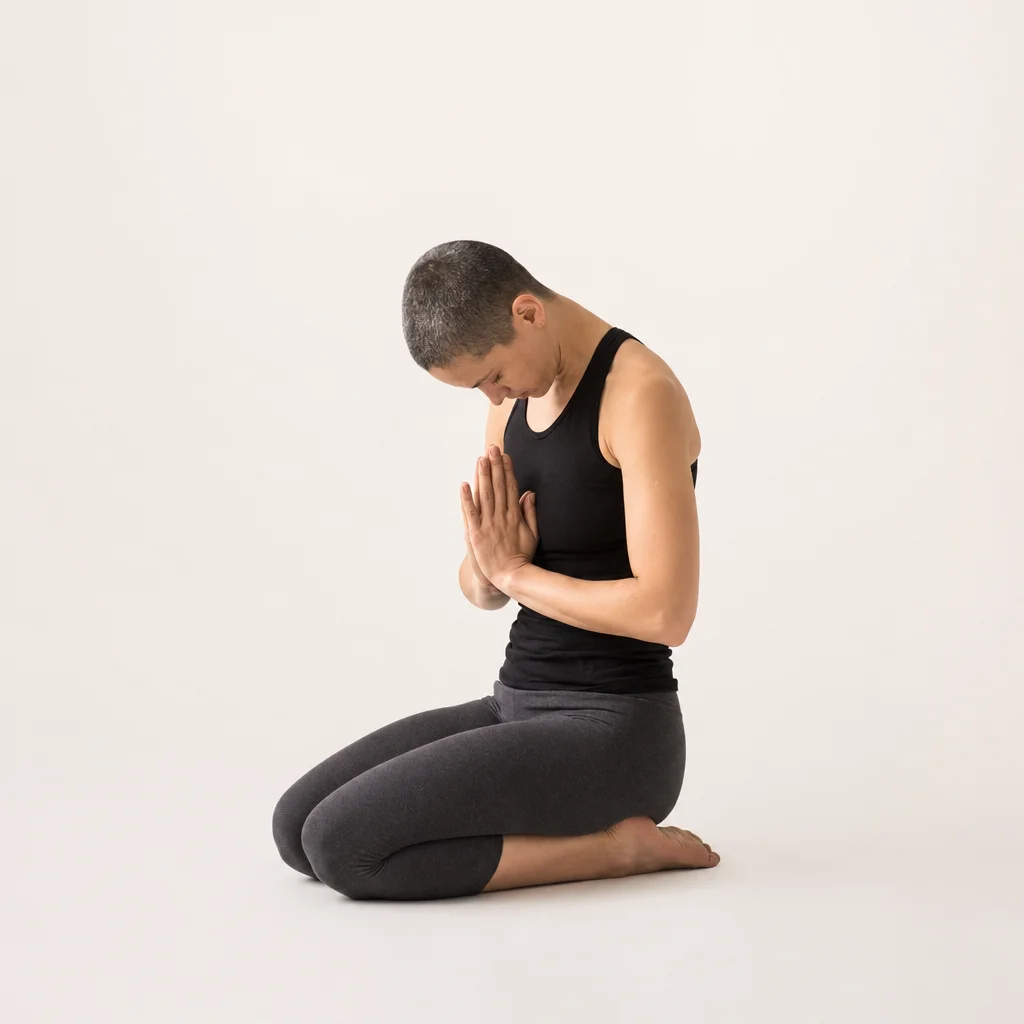
Position: A combination pose specific to your dynamic that signals maximum formality. Typically involves the most demanding version of kneeling or standing with rigid posture, specific hand placement (often hands behind back, clasped at small of back), chin at a precise angle, and eyes at a specific focal point.
Purpose: Signals entry into the highest level of protocol. Used for ceremonies, important rituals, or to mark formal transitions. High Protocol communicates “we are now operating at maximum formality.”
When to use: Opening or closing rituals for formal sessions. Contracts or protocol reviews. High-stakes moments in the dynamic. Whenever you want to invoke the full weight of the power exchange.
Common mistakes: Using it too frequently — it loses meaning through overuse. High Protocol derives its power from being reserved for significant moments.
If you’re formalizing a D/s contract, this is the pose your submissive holds when the contract is being read or signed.
Teaching Positions Effectively
Knowing these positions is useless if you can’t teach them effectively. Here’s how to train them so they become second nature.
Demonstrate First
Don’t just describe positions verbally. Show them what you want.
If you can physically demonstrate — even in modified form — do it. Get into an approximation of the pose yourself so they can see the overall shape, posture, angles. Even if your demonstration isn’t perfect, seeing it helps.
If you can’t or don’t want to demonstrate physically, use other methods:
- Show them photos or illustrations of the pose
- Guide them into position while describing what you’re doing
- Compare to positions they might know from other contexts
Visual and kinesthetic learning are more effective than verbal for most people. Combine methods for best results.
After demonstrating, have them try it while you observe. Don’t expect perfection immediately. You’re showing them the target, then giving them space to approximate it.
Use Physical Guidance
Words only go so far. Touch teaches better.
When they’re attempting a position, guide them physically into adjustments. Move their hand to the correct placement. Adjust their knee angle with yours. Tilt their chin to the angle you want. Physical guidance creates muscle memory faster than verbal description.
This requires consent and appropriate context. Establish that physical positioning adjustments are part of training. Some submissives find physical guidance helpful and connective. Others find it overwhelming. Know yours.
When physically adjusting:
- Move one thing at a time — don’t overwhelm them with simultaneous adjustments
- Explain what you’re adjusting and why
- Let them feel the correct position, then have them release and reassume it to check if they’ve integrated the adjustment
- Be patient — bodies need time to learn new patterns
Physical guidance isn’t manhandling. It’s teaching through touch. Firm but not forceful. Clear but not rough. You’re guiding, not forcing.
Practice Regularly
Submission poses become natural through repetition. Regular short practice sessions beat sporadic long ones.
Dedicate specific time to pose training separate from scenes. Five to ten minutes several times a week works better than an hour once a month. The regular repetition builds neural pathways.
Practice structure:
- Start with poses they know — build confidence
- Introduce or refine one new pose or detail
- Cycle through all current positions
- End with the pose they’re most comfortable with — end on success
Make practice low-stakes. This isn’t performance time. It’s training time. Mistakes are expected and fine. The goal is learning, not perfection.
As positions become familiar, start using them in context — greeting rituals, scene beginnings, protocol moments. This transfers training to real application.
Build Gradually
Don’t teach all 12 positions in week one. Start with two or three foundational ones. Master those before adding more.
Suggested progression:
- Week 1-2: Kneel (Nadu), Attention Stand
- Week 3-4: Present, Rest
- Week 5-6: Bent Over, All Fours
- Week 7+: Add further positions as needed for your dynamic
Each new pose should build on skills from previous ones. Standard Kneel teaches basic kneeling mechanics. Tower builds on that by adding the upright posture. Present builds on Nadu by adding the display element.
Layer complexity slowly. Get the basic pose shape first. Then refine details — hand placement, eye direction, specific angles. Then add variations. Build the foundation before building the structure.
Connect Pose to Purpose
Don’t drill positions mechanically. Explain why each one exists and when you’ll use it.
“This is Present. You’ll use this when I want to inspect you before a scene, or when I want to appreciate your body, or when you’re offering yourself to me. The wide knees and thrust chest create vulnerability and display. That’s the point.”
When they understand the purpose, the pose becomes meaningful instead of arbitrary. They’re not just memorizing shapes — they’re learning a language.
During scenes, occasionally name the purpose: “Present — I want to appreciate you” or “Prostrate — show me your devotion.” This reinforces the connection between pose and meaning.
Over time, the position itself will trigger the associated mental state. They assume Present and feel the vulnerability and offering. They Prostrate and access worship. Each posture becomes a shortcut to the psychological space.
Using Positions in Practice
How to deploy these positions in actual dynamic application.
Pose Transitions as Protocol
Use pose commands to mark transitions between phases of your time together.
Example protocol:
- When you arrive home → greeting pose (Kneel or Heel)
- Beginning a scene → starting pose
- Between scene activities → Attention while you prepare
- Scene complete → Rest for aftercare
- Formal moments → High Protocol
Pose transitions create structure and ritual around key moments. They mark beginnings, endings, and shifts. The pose itself becomes a transition signal — both of you shift roles when the command is given. The position communicates the phase change without words.
During Scenes
Use positions as scene architecture — the framework that makes your planned activities possible.
Before any scene, consider:
- What pose provides the access I need?
- What pose can they sustain for the duration I’m planning?
- What pose creates the psychological state I want?
- What pose is safest for the specific activity?
Match pose to purpose. Impact play needs Bent Over or All Fours. Sensory play might need Spread or bound positions. Psychological scenes might need poses that create vulnerability even without physical activity.
Don’t be locked into starting poses and maintaining them regardless of need. Transition between positions as the scene requires. “Attention… now Present for inspection… now Bent Over for what comes next.”
Pose changes during scenes create psychological impact of their own. Each transition is another moment of obedience, another opportunity to demonstrate submission.
Stress Positions (Caution)
Some positions become stressful when held for extended periods. These can be used as punishment, but with serious caution.
Stress position punishment involves commanding a pose that requires muscular effort — Tower, standing with arms raised, All Fours — and requiring it be held until muscles fatigue.
Critical safety notes:
- Never use poses that risk injury as punishment
- Watch closely — muscle failure can cause collapse and injury
- Have a safeword and respect it immediately
- Don’t use stress positions while angry or in situations where you can’t monitor
- Be prepared for the psychological intensity — this type of punishment hits hard
If you’re new to D/s, skip stress positions entirely. The risk-to-benefit ratio is poor for beginners. There are safer punishment options. Read our consent and negotiation guide before building a punishment protocol.
For Meditation and Grounding
Many submissives find certain positions meditative. Use this deliberately.
Positions that work well for meditation:
- Kneel (Nadu) — sustainable, stable, familiar
- Rest — comfortable enough to maintain for extended periods
- Prostrate — intense but creates deep internal focus
How to use these positions for meditation or grounding:
- Command the pose in a quiet space
- Set a duration — even just 5-10 minutes
- Allow or encourage them to focus inward
- Don’t demand stillness perfection — this is about headspace, not performance
- Use for emotional regulation when they’re anxious or overwhelmed
- Incorporate into aftercare for submissives who process internally
Some submissives resist being still. For them, holding a position feels like punishment rather than meditation. Don’t force it. But for submissives who crave stillness and structure, posture-based meditation becomes a tool for their wellbeing. If this resonates, several D/s protocol podcasts have covered position training and mindfulness in depth.
Public-Friendly Modifications
Most of these positions are obviously D/s. Public-friendly modifications maintain the psychological impact while appearing vanilla.
Examples:
- Attention Stand becomes standing with good posture
- Nadu becomes sitting at your feet during a picnic
- Present becomes stretching with arms overhead
- Rest becomes leaning against you
The modification looks innocuous to observers but both of you know what it represents. This creates delicious tension — you’re doing your dynamic in public, hidden in plain sight.
Negotiate public modifications carefully. What’s comfortable in private might be too exposing in public even in modified form. Respect their boundaries around public visibility.
Common Mistakes
What to avoid when building your position training practice.
Too Many Poses Too Fast
The eager new Dom tries to teach ten positions in week one. The submissive becomes overwhelmed. None of them stick.
Start small. Two to three. Master them completely. Then add more slowly. Quality beats quantity every time.
Trying to teach too many too fast creates confusion instead of clarity. Your submissive can’t remember which is which. They stress about getting it wrong. The whole purpose — creating clarity and structure — is defeated.
Slow down. Build the foundation first.
Poses Without Purpose
Making positions arbitrary displays of control with no deeper purpose breeds resentment.
If you can’t articulate why a position exists beyond “because I said so,” rethink whether you need it. Submissives see through empty posturing.
Every position should serve the dynamic somehow:
- Practical function (access for specific activities)
- Psychological purpose (creates specific headspace)
- Protocol value (marks transitions or creates ritual)
- Training benefit (builds discipline or capacity)
When poses have clear purpose, submissives engage with them meaningfully. When they’re arbitrary, compliance becomes mechanical or resentful.
Ignoring Physical Comfort and Safety
Demanding positions that cause pain or injury is stupid dominance, not strong dominance.
Yes, some poses are intentionally uncomfortable. That’s different from injurious. Know the difference.
Warning signs you’re ignoring safety:
- They report sharp pain (not discomfort — pain) in joints or muscles
- They experience numbness or tingling
- They’re shaking uncontrollably trying to maintain the pose
- They’ve mentioned a physical limitation and you’re dismissing it
- You’re more concerned with aesthetic perfection than their safety
A submissive with damaged knees can’t kneel for you anymore. A submissive with a back injury loses capacity. Protecting their physical capacity is protecting your dynamic’s future.
Strong dominance means getting sustainable compliance while maintaining their health. Push them, yes. Injure them, no. A strong trust foundation means they can tell you when a pose is causing real harm.
Inconsistent Commands
Using different names for the same position or accepting wildly varying execution creates confusion.
If Nadu means knees-wide-palms-up today and knees-together-palms-down tomorrow, you’re not teaching a position. You’re creating anxiety.
Be consistent in:
- Names you use for each position
- How you want poses executed (within reason for natural variation)
- When and why you use specific poses
- Consequences for pose errors
Consistency creates clarity. Clarity creates confidence. Confidence creates better submission.
No Regular Practice
Teaching positions during one training session then never practicing or using them means they’re forgotten.
They become second nature through repetition. Use them regularly or lose them.
Build them into your dynamic:
- Regular brief practice sessions
- Actual use during protocol time
- Incorporation into scenes
- Greeting and parting rituals
If you’re not using positions regularly, either commit to using them or acknowledge they’re not actually important to your dynamic and stop pretending they are.
Customizing Your Positions
The poses in this guide are templates. Make them yours.
Modify for Physical Limitations
Always customize positions to account for your submissive’s actual body capabilities.
Take any pose and ask:
- Can they physically assume this safely?
- Can they sustain it for the duration I need?
- Does it cause pain that’s counterproductive?
- What modifications make it accessible while preserving its purpose?
Common limitations:
- Knee problems: Use cushions, allow kneeling on just one knee, create modified versions, or focus on standing poses
- Back issues: Allow supported versions or pose modifications, remove arch requirements
- Flexibility limitations: Adjust spread/reach to their actual range of motion
- Strength limitations: Reduce duration or add support for poses requiring sustained engagement
Document your modifications. If you modify Nadu to allow cushions under knees, that’s their Nadu now. Write it down. Be consistent.
Modification isn’t failure. It’s intelligent adaptation. Each position serves a psychological and practical purpose. If modification allows them to experience that purpose safely, the modification is correct.
Personal Preferences and Aesthetics
You might love wide-knee kneeling. Your Dom friend might prefer knees-together. Both are valid.
Customize to match your aesthetic preferences:
- Hand placement — palms up, down, behind back, behind head
- Knee width — together, shoulder-width, wide
- Eye contact — direct gaze, downcast, eyes closed
- Posture details — arched back, flat back, specific head angles
The standard descriptions in this guide are starting points. Adjust every detail to create the exact look and feel you want.
Creating Your Own Submission Poses
You’re not limited to traditional poses. Create ones unique to your dynamic.
Process:
- Identify the purpose — what should this pose accomplish?
- Design the pose — what physical arrangement achieves that purpose?
- Test it — is it physically sustainable, safe, and effective?
- Refine it — adjust based on testing
- Name it — give it a consistent name
- Teach it — train it like any other position
- Use it — incorporate into your dynamic
Your custom positions become part of your unique dynamic language. They’re yours in a way traditional ones aren’t. They reflect your specific relationship and needs.
Building a position vocabulary is part of the larger project of dominating your submissive with clarity and intention. The positions are just one layer.
Common Questions
How many positions should a submissive learn?
Start with three. One kneeling position, one standing position, one rest position. Master those completely before adding more. Most dynamics function well with 5-8 positions that they know fluently, rather than 15 they execute poorly. More isn’t better — depth and reliability matter more than range.
How do these differ from slave positions?
The D/s position system described here is the broader category — it covers any dynamic where structured physical postures are used. Slave positions specifically refers to formal protocols used in Master/slave (M/s) dynamics, which tend toward more rigid codification (often drawing from Gorean protocols like Nadu, Tower, etc.). Functionally, the two systems often look similar or identical; the difference is more about relationship structure and formality level than the postures themselves.
How long does it take to get these right?
Basic positions become reliable within 4-6 weeks of regular practice (3-4 times per week). That means they can assume the position correctly when commanded without needing guidance. Fluency — where the posture triggers the associated psychological state automatically — takes several months of consistent use. Expect a year before positions feel truly second nature rather than practiced.
Should holding these positions hurt?
No. Discomfort from muscle engagement is normal and can be intentional. Pain in joints, sharp pain, numbness, or tingling are warning signs. Sustainable positions create the psychological effect you’re after without causing injury. If a position reliably causes pain, modify it or replace it. A submissive who can’t kneel because you damaged their knees can’t serve your dynamic.
Which position should I teach first?
Standard Kneel (Nadu). It’s psychologically potent, physically sustainable for most bodies with modifications, and versatile enough to use in nearly every context. It’s also the foundation for the other kneeling positions — once they know Nadu, Present and Tower are variations rather than entirely new skills. If your submissive has knee issues, substitute Attention Stand as the first position.
Best for
Dominants establishing protocol with a new submissive, or refining a long-term dynamic that’s gotten loose. If your submissive’s execution of positions has become sloppy or inconsistent, this guide gives you a systematic reset.
Skip if
You’re looking for one-off scene ideas — this is foundational protocol work. Submission poses reward Doms who want structure, ritual, and reliable psychological tools built into their dynamic. If you want a scene checklist, this isn’t it.
These positions are a language you build together. Each one is a word. Combined, they create sentences. Eventually you develop fluency — communication becomes effortless because you both know the vocabulary.
But language only works when it’s used. Positions you teach but never deploy are wasted effort. Positions you use inconsistently create confusion. Positions you enforce arbitrarily breed resentment.
Teach with purpose. Use with intention. Modify with wisdom. And build the vocabulary that serves your unique dynamic, one position at a time.
If you’re developing your pose vocabulary collaboratively, the body pose and position protocol checklist gives you and your partner a shared reference point for exploring what appeals to each of you.
Your submissive’s body is waiting for direction. Give it clearly.