
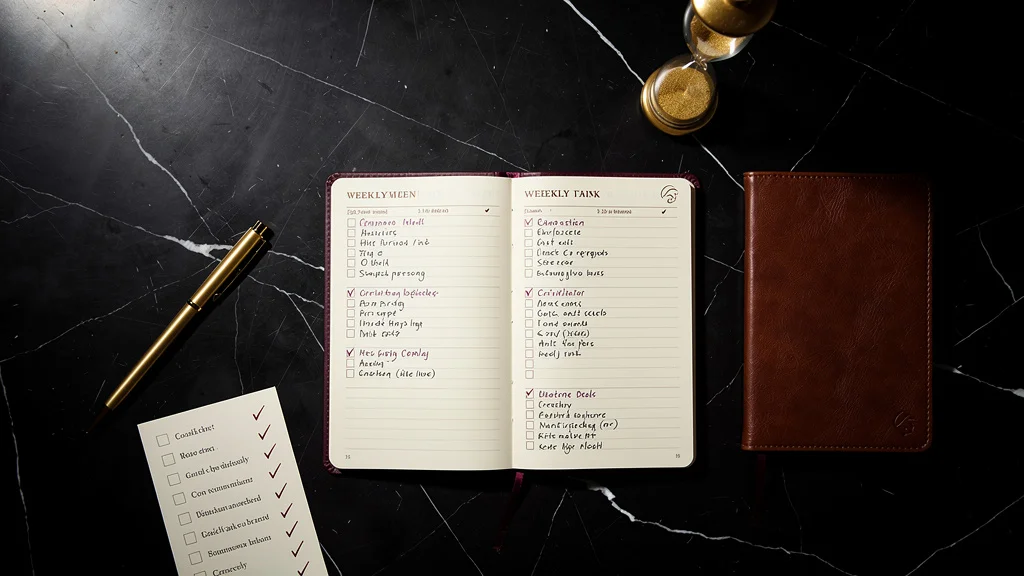
A goal without a plan is just a wish. The same applies to D/s.
You’ve negotiated boundaries. You’ve discussed desires and limits. You both want to build a real power exchange dynamic. But wanting it and building it are two different things. Without a plan, you’re hoping that good intentions and hot chemistry will magically create the structure you’re both craving.
For the stretches when you’re unavailable, point her to Tasks for When He’s Away on Submissive Path — solo practice she can hold without you micromanaging it.
They won’t.
Most new Doms make the same mistake: they dive in with enthusiasm but no roadmap. They introduce random protocols. They create rules on impulse. They try techniques they saw online without knowing how they fit into a coherent development process. Six weeks later, the dynamic feels chaotic instead of structured, frustrating instead of fulfilling.
A training plan solves this. It’s your blueprint for building the D/s dynamic you both want. It creates clarity about where you’re going, how you’ll get there, and what success looks like along the way. It transforms vague desires into concrete action steps.
This isn’t about writing a script you’ll follow rigidly. It’s about creating a framework that provides direction while remaining flexible enough to adapt as you both grow. Let’s build one.
Why You Need a Training Plan
Training without a plan is like construction without blueprints. You might end up with something, but it probably won’t be what you envisioned, and it definitely won’t be as solid as it could have been.
Structure creates safety. Your submissive is giving you considerable trust and vulnerability. A clear plan demonstrates that you’ve thought this through, that you have a coherent vision, that you’re not just winging it. When your submissive can see the structure you’re building, they can relax into it. Random, impulsive dominance creates anxiety. Planned, intentional dominance creates security.
Progress becomes visible and measurable. Without a plan, how do you know if you’re making progress? With one, you can look back at week one and see how far you’ve come. You can identify what’s working and what needs adjustment. Your submissive can see their own growth, which reinforces their submission and builds confidence.
Expectations are clear for both parties. A training plan eliminates the guesswork. Your submissive knows what you expect this week, this month, this phase. You know what you’re working toward. There’s no confusion about whether today’s submission was “good enough” because you both know what the standard is.
It prevents scope creep and overwhelm. New Doms often try to do everything at once. They want 24/7 protocols, complex service tasks, position training, and deep psychological submission by week three. The result? Both partners get overwhelmed and the dynamic collapses. A plan forces you to phase things appropriately, building complexity gradually on a solid foundation.
The dynamic has direction. A training plan answers the question “what are we building together?” Instead of drifting through your dynamic hoping it gets better, you’re actively constructing something intentional. Direction creates momentum. Momentum creates satisfaction.
If you’re serious about how to train a submissive, a plan isn’t optional. It’s foundational.
Components of a Training Plan
An effective training plan includes several key elements that work together to create a comprehensive framework.
Goals - both short-term and long-term. Where are you trying to get to? What does success look like in three months? Six months? A year? Short-term goals might be “establish three basic positions” or “create a morning check-in routine.” Long-term goals might be “develop 24/7 power exchange” or “train her to anticipate my needs without being told.”
Write these down. Vague intentions like “deeper submission” don’t help. Specific goals like “by month three, she will maintain kneeling position for 15 minutes without discomfort” give you something concrete to work toward.
Rules and protocols. What are the behavioral expectations? How should your submissive address you? What daily rituals will reinforce the dynamic? What areas of life does the power exchange cover? Rules and protocols are the daily embodiment of your training plan. They’re how abstract goals become lived reality.
Start with a few foundational rules. Add complexity gradually. Each rule should serve a purpose—reinforcing submission, developing a skill, or meeting a practical need.
Training schedule and timeline. When will training sessions happen? How often? For how long? What phases will you move through and on what timeline? A schedule creates accountability and consistency. It prevents training from becoming something you do “when you feel like it” and makes it a structured part of your relationship.
Milestones and checkpoints. How will you know when to move from one phase to the next? What achievements indicate readiness for increased complexity? Milestones give you both something to work toward and celebrate. They mark progress and create natural pause points for assessment.
Reward structure. How will you acknowledge progress and good performance? What motivates your specific submissive? Understanding their type of submissive helps you create rewards that actually reinforce the behaviors you want. For some, praise is enough. Others need tangible privileges, physical rewards, or special experiences.
Review periods. When will you step back and assess how things are going? Weekly? Biweekly? Monthly? Regular reviews let you course-correct before small issues become big problems. They create space for honest feedback and adjustment.
Built-in flexibility. Life happens. Work gets stressful. Someone gets sick. Family obligations arise. Your plan needs flex points where intensity can decrease temporarily without the whole structure collapsing. Build in permission to adjust from the start.
Step-by-Step: Building Your Plan
Let’s walk through actually creating your training plan. This is where theory becomes action.
Step 1: Define Your D/s Vision
Before you can plan the path, you need to know the destination. Sit down together—outside of any D/s dynamic headspace—and discuss what you both want this to look like.
Is this 24/7 or scene-based? Some dynamics are always-on, with power exchange woven through daily life. Others activate during specific times—evenings, weekends, dedicated scenes. Neither is better, but they require different training approaches. A scene-based dynamic focuses on dropping into intense headspace quickly. A 24/7 dynamic builds sustainable, integrated structure.
What areas of life does it cover? Does your dominance extend to what she wears? How she spends money? Career decisions? Friendships? Or is it primarily sexual and stays in the bedroom? Be explicit about scope. Misaligned expectations here create serious conflict.
What does the ideal dynamic look like in six months? One year? Paint a detailed picture. What does a typical day look like in your ideal dynamic? What protocols are in place? How do you interact? What has changed from today? Getting concrete about the vision helps you work backward to create the steps that get you there.
What specifically does each of you want to experience? For you: Do you want spontaneous obedience? Anticipated needs? A specific aesthetic? For her: Does she want to feel owned? Challenged? Safe? Useful? Understanding the emotional and psychological experiences you’re both seeking ensures the training creates those feelings, not just performs behaviors.
Write down your shared vision. This becomes your north star when the plan needs adjustment or you’re unsure what to do next.
Step 2: Assess Where You Are Now
Honest assessment of your starting point determines realistic pacing and appropriate first steps.
Current experience levels. Is this her first D/s relationship or her fifth? Have you trained a submissive before or is this new territory? Beginners need more time on fundamentals. Experienced submissives might progress faster through basic protocols but need untraining of habits from previous dynamics.
Existing trust foundation. How long have you known each other? How deep is your relationship outside the D/s context? New relationships need more time building trust in your D/s relationship before diving into vulnerable territory. Established relationships might accelerate certain elements.
Her limits and interests. What has she explicitly said she wants to explore? What are her hard limits? Soft limits? What excites her when you discuss potential training? Your plan should lean into her genuine interests while respecting boundaries absolutely.
Your skills and experience. Be honest about what you know how to do safely and what requires learning. If you’re planning rope bondage training but you’ve never tied anyone, factor in time for you to get proper education. Planning impact training? Make sure you understand technique, anatomy, and safety first.
Time available for training. How much time can you realistically dedicate? If you both work demanding jobs and have limited time together, don’t plan daily hour-long training sessions. Plan what you can actually sustain. It’s better to train twice a week consistently than to plan daily sessions that happen erratically.
Step 3: Identify Training Goals
Now translate your vision into specific, achievable goals using the SMART framework.
Specific: “Learn positions” is vague. “Master five positions—kneeling, presenting, waiting, inspection, and rest—with proper form” is specific. You both know exactly what success looks like.
Measurable: How will you know the goal is achieved? “She will hold kneeling position for 10 minutes without shifting or discomfort” is measurable. “Better at kneeling” isn’t. Build in clear success criteria.
Achievable: Goals should stretch current ability without being impossible. If she’s never knelt before, “hold position for 30 minutes by week two” is unrealistic and sets up failure. “Hold position for 5 minutes by week four, 10 minutes by week eight” is achievable progression.
Relevant: Every goal should serve the dynamic you’re building. Don’t add goals just because you saw them in someone else’s dynamic. If service doesn’t interest either of you, don’t include domestic task training. If protocol is central to your vision, prioritize those goals.
Time-bound: By when? “Eventually learn positions” has no urgency. “Master three positions by end of month two” creates a timeline that generates momentum.
Write out 3-5 primary goals for the first three months. These are your focus. Everything else is secondary.
Step 4: Create the Schedule
Abstract goals need concrete time allocation to become real.
Weekly training sessions. When will dedicated training happen? “Tuesday and Saturday evenings, 7-9pm” is specific. These sessions are when you actively work on skills—practicing positions, introducing new protocols, doing scene work focused on training rather than just play.
Block this time. Treat it like any other important commitment. Consistency builds habits and habits build the dynamic.
Daily check-ins. Even if you can’t do full training sessions daily, brief check-ins reinforce the dynamic. A morning text exchange, a 5-minute evening protocol, a bedtime routine. These micro-rituals keep the power exchange present even during busy periods.
What time? What format? What’s the minimum that counts as a successful check-in? Define it so you both know when it’s been met.
Monthly reviews. Set a recurring time for comprehensive assessment. Last Sunday of each month, you sit down together (out of dynamic headspace) and discuss what’s working, what isn’t, how she’s feeling, what needs adjustment. This isn’t optional—it’s maintenance that prevents small issues from becoming relationship-ending problems.
Flexibility for life. Build in explicit permission to adjust. Maybe training sessions are sacred and you reschedule rather than skip. Maybe daily check-ins can be lighter during particularly stressful work weeks. Define what flexibility looks like so adjusting doesn’t feel like failure.
Step 5: Build in Flexibility
Rigid plans break under pressure. Flexible plans adapt and survive.
Regular review points. Every four weeks, assess whether the plan is working. Is the pace right? Are the goals still relevant? Is anything causing unnecessary stress or not serving the dynamic? Review points give you permission to iterate.
Permission to adjust. Make explicit that changing the plan isn’t failure. “We thought daily service tasks would work but they’re creating resentment, so we’re pulling back to three times a week” is smart adjustment, not submission failure. Build a culture of honest assessment over rigid adherence.
Handling setbacks. Life will interfere. Work crises happen. Health issues arise. Someone’s mental health dips. The plan needs a framework for scaling back temporarily without abandoning the dynamic entirely. Maybe during crisis periods, you maintain only core protocols and skip skill development. Define minimum viable structure.
Celebrating wins. When you hit a milestone, acknowledge it. Reached the three-month mark with consistent check-ins? Celebrate. She mastered all five positions? Mark the achievement. Celebration reinforces progress and creates positive associations with the work of training.
Sample Training Plan Template
Here’s a concrete 12-week template you can adapt. This assumes a scene-based dynamic with moderate time availability, but adjust based on your assessment.
WEEKS 1-2: Foundation
Goal: Establish communication patterns and basic trust framework
Rules:
- Address me as “Sir” in private
- Ask permission before leaving the room during training sessions
- Use safe words without hesitation (test this in low-stakes contexts)
Daily:
- Morning text check-in by 9am: “Good morning, Sir” and brief sharing of one intention for the day
- Evening text at 9pm: report on the day, any challenges or wins
Training Sessions:
- 2x per week, 1 hour each
- Focus: Learning each other’s responses, discussing boundaries in depth, simple position practice (basic kneeling only), trust exercises
Milestones:
- Complete detailed limits checklist together
- Successfully use yellow safeword at least once
- Establish morning/evening check-in as comfortable routine
WEEKS 3-4: Basic Protocols
Goal: Introduce foundational protocols and expand position training
Rules: (Keep previous rules, add:)
- Morning greeting protocol: kneel when I enter the room for the first time each day
- Evening greetings: “How may I serve you today, Sir?”
Daily:
- Continue morning/evening texts
- Morning greeting protocol (in person, skip if not together)
Training Sessions:
- 2x per week, 90 minutes each
- Focus: Learning three positions (kneeling, presenting, waiting), practicing transitions between positions, holding time 5 minutes minimum, introduction to simple commands
Milestones:
- Execute all three positions with correct form
- Transition between positions smoothly on command
- Hold kneeling for 7-10 minutes without discomfort
WEEKS 5-6: Skill Layering
Goal: Add first service element and refine position work
Rules: (Keep previous, add:)
- Prepare my coffee Saturday mornings to my specified preference
- Lay out clothes for Sunday (if spending weekend together)
Daily:
- Morning/evening texts continue
- Greeting protocols continue
- Coffee service on Saturdays
Training Sessions:
- 2x per week, 90 minutes
- Focus: Teaching coffee preparation to exact standard, adding two more positions (inspection, rest), combining positions with simple service tasks, first light impact play if she’s interested
Milestones:
- Coffee prepared correctly without reminders
- Master all five positions
- Hold primary position (kneeling) for 15 minutes
WEEKS 7-8: Complexity and Endurance
Goal: Increase position holding time and add protocol complexity
Rules: (Keep previous, add:)
- Wait for permission to sit/stand when together during evening hours
- Report any rule violations same-day
Daily:
- Morning/evening texts
- All established protocols
- Weekend service tasks
Training Sessions:
- 2x per week, 2 hours
- Focus: Longer position holding (working up to 20 minutes), combining multiple protocols in sequence, introduction to more intense scenes building on established trust
Milestones:
- Hold positions for 20 minutes
- Execute complete protocol sequence without prompting
- Successfully complete first longer, more intense scene
WEEKS 9-10: Psychological Depth
Goal: Add psychological elements and anticipation training
Rules: (Keep previous, add:)
- Anticipate one need daily without being asked (she chooses what, reports what she did)
- Weekly written reflection on submission (what’s working, challenges, desires)
Daily:
- Morning/evening texts with more depth—share something vulnerable
- All protocols
- Anticipation practice
Training Sessions:
- 2x per week, 2 hours
- Focus: Developing her ability to read my moods and anticipate needs, deeper psychological play, exploring soft limits we’ve discussed, practicing service in more complex scenarios
Milestones:
- Successfully anticipate needs 5 days out of 7
- Complete first weekly reflection with genuine vulnerability
- Explore one soft limit safely
WEEKS 11-12: Integration and Assessment
Goal: Integrate everything learned and prepare for next phase
Rules: All previous rules maintained
Daily:
- All protocols run smoothly with minimal correction needed
- Anticipation becomes more sophisticated
Training Sessions:
- 2x per week, 2 hours
- Focus: Running complete scenes that integrate positions, protocols, service, and psychological elements, testing endurance and integration, celebrating progress
Milestones:
- Execute full protocol sequence from greeting through service through scene through aftercare without prompting
- Demonstrate growth in anticipation and reading me
- Complete comprehensive 12-week review
WEEK 12 REVIEW SESSION
Dedicated time to assess the full 12 weeks:
- What goals were met?
- What was harder than expected?
- What was easier?
- What does she want more/less of?
- What do I want to adjust?
- What’s the plan for months 4-6?
This template should be customized to your specific dynamic, but it demonstrates the structure: clear goals, layered complexity, specific protocols, defined milestones, built-in review.
Training Plan by Submissive Type
Different submissive types need different training approaches. One size does not fit all.
Service submissive: Your plan should be task-focused. Each week should introduce new service skills or refine existing ones. Goals should center on competence, efficiency, and anticipating needs. Rewards should emphasize how useful she is. Training sessions might be less about scenes and more about detailed instruction on how you like things done. Milestones are about mastery of specific skills—cooking your favorite meal perfectly, organizing your space to your standard, completing morning routines without oversight.
Bratty submissive: Build in flexibility for push-back. Your plan should include rules that she’ll definitely test and consequences that follow consistently. Goals might include “learning when bratting is welcome vs. when genuine obedience is required.” Training sessions should have clear boundaries she can push against. Rewards might include funishment that scratches the itch or increased intensity when she’s been particularly defiant. The plan needs to distinguish between healthy bratting and actual disrespect.
Little: The training plan needs to be gentler and more play-focused. Use age-appropriate language for rules and consequences. Training sessions might include structured playtime, bedtime routines, or learning to ask for what she needs. Goals should focus on creating safety in regression and deepening her ability to access little space. Rewards are treats, special activities, or extra attention. Milestones might be “comfortably regress in my presence” or “ask for comfort when needed.”
Bedroom-only submissive: Your plan is scene-focused. Don’t try to extend protocols into daily life unless explicitly desired. Training sessions are where everything happens—the rest of life is partnership. Goals are about scene competence—learning what you like, developing her ability to drop into submission quickly, building endurance for longer scenes. The plan should include clear rituals for transitioning in and out of D/s mode. Reviews should address whether the compartmentalization is working or causing tension.
Understanding types of submissives helps you avoid creating a plan that works great in theory but doesn’t match who your submissive actually is. For dynamics with a strong service or obedience focus, reviewing the slut training checklist with your partner can open honest conversations about which specific acts of submission appeal to each of you.
Once you know what appeals to both of you, the leadership side of the dynamic needs structure too. The 21 Day Dom Challenge gives dominants a step-by-step framework for building that structure, starting with the consent conversation and ending three weeks later with a more fully led dynamic.
Adjusting the Plan Over Time
Your initial plan isn’t permanent. It’s a starting framework that evolves as you both do.
Monthly review sessions. This is where adjustment happens. Set aside an hour where you’re both equals, not Dom and submissive. Discuss honestly: What’s working? What’s harder than expected? What’s boring or frustrating? What does she want more of? What do you need to change?
Take notes during these reviews. Patterns emerge over time that inform better planning.
Signs it needs adjustment. If training consistently feels like a chore rather than fulfilling, something’s off. If rules are being broken frequently despite genuine effort, they might not fit this submissive. If progress has stalled, you might be pushing too hard or not hard enough. If resentment is building, priorities are likely misaligned.
Physical signs matter too. If protocols are causing actual pain or injury, adjust immediately. If stress levels are climbing instead of decreasing, the plan is too intense.
When to accelerate vs. slow down. Accelerate when: she’s consistently exceeding expectations, asking for more, mastering skills faster than anticipated, showing genuine hunger for increased complexity. Slow down when: rules are being broken frequently, she’s expressing overwhelm, you’re both showing signs of burnout, life circumstances have changed and reduced available time or energy.
Documenting what works. Keep a training journal. After sessions, note what went well and what didn’t. After reviews, record what you’re changing and why. Over time, this creates a database of what works for your specific dynamic. You’ll see patterns—maybe she responds better to training in the evening than the morning, or certain types of rewards work better than others.
Documentation also lets you see actual progress. When you’re in month six and feeling like nothing’s changing, looking back at month one shows how far you’ve come.
Common Planning Mistakes
Even well-intentioned Doms make these errors. Avoid them.
Too ambitious too fast. The most common mistake. You want the perfect 24/7 dynamic by month two. You introduce ten rules in week one. You expect protocol mastery before basic trust is established. Result: overwhelm, failure, frustration. Build gradually. Layer complexity on solid foundations. Resist the urge to do everything immediately.
No flexibility built in. You create a rigid plan and refuse to deviate. When life interferes or something isn’t working, you push harder instead of adjusting. Rigidity breaks relationships. Your plan should guide, not imprison. Build in explicit permission to modify.
Forgetting the WHY. You get so focused on executing the plan that you forget why you’re training in the first place. The goal isn’t perfect protocol performance. It’s building a dynamic that fulfills both of you. If a rule isn’t serving that larger purpose, change it. If training is meeting every metric but creating misery, the plan is wrong.
Not involving the submissive. You create the entire plan in isolation and present it as fait accompli. She has no input, no buy-in, no ownership. Result: she’s following your plan rather than building your shared dynamic. Create the plan together. Her input makes it stronger and ensures you’re building something she actually wants.
No review periods. You set the plan at the start and never reassess. Months go by without checking whether it’s working. Small issues compound into relationship-threatening problems. Build in mandatory review periods. Make adjustment part of the process, not an admission of failure.
Common Questions
How detailed should the plan be?
Detailed enough to provide clear direction, flexible enough to allow spontaneity. Define specific goals, rules, and schedules. But don’t script every interaction or plan every scene down to the minute. The plan should answer “what are we working on this month and how will we do it?” It shouldn’t dictate every moment of every day. Aim for structure that creates freedom within boundaries, not restriction that eliminates all spontaneity.
Should my submissive see the plan?
Absolutely. This is a collaborative dynamic, not a surprise you’re orchestrating. She should see the plan, provide input, understand the goals, and know what’s expected. The only possible exception is if you’ve explicitly negotiated a dynamic where she prefers not to know future training elements—but even then, she should understand the overall framework and timeline. Transparency builds trust. Secrecy builds anxiety.
What if we can’t stick to the schedule?
Life happens. The schedule is an ideal, not an absolute. If you miss a training session because of legitimate conflict, reschedule or adjust rather than abandoning the plan entirely. If you’re consistently unable to stick to the schedule, the schedule is wrong—adjust it to match your reality. Better to plan two sessions monthly that happen consistently than four that rarely occur. The goal is sustainable structure, not impossible standards.
How long should the first training plan cover?
Start with 12 weeks. That’s long enough to establish real patterns and see meaningful progress, but short enough to stay focused and manageable. After 12 weeks, do a comprehensive review and create the next phase plan. Some Doms prefer four-week phases with more frequent complete overhauls. Others plan six months at a time. Find what creates enough structure without feeling overwhelming to plan.
What if our goals are different?
Alignment on major goals is essential for a successful dynamic. If you want total power exchange and she wants bedroom-only, that’s a fundamental incompatibility that planning won’t fix. But if the overlap is strong and differences are in details, you can find middle ground. Maybe you both want daily structure, but you’re focused on service while she’s more interested in protocol. Your plan can include both. The key is that the core direction is shared, even if specific elements vary in importance to each of you.
Key Takeaways
-
A training plan transforms vague desires into actionable steps, creating clear direction and measurable progress for your D/s dynamic.
-
Essential components include specific goals, rules and protocols, a realistic schedule, milestones, reward systems, and built-in flexibility for adjustment.
-
Build your plan collaboratively by defining your shared vision, honestly assessing your starting point, setting SMART goals, creating a realistic schedule, and explicitly permitting flexibility.
-
Different submissive types require different training approaches—customize your plan based on whether you’re working with a service sub, brat, little, or other type.
-
Review and adjust monthly based on honest feedback, documented progress, and changing circumstances—flexibility is strength, not weakness.
-
Common mistakes include moving too fast, creating rigid plans, focusing on execution over purpose, excluding your submissive from planning, and failing to build in regular reviews.
The difference between wishing for a great D/s dynamic and building one is a plan. Structure creates safety. Clarity creates progress. Direction creates satisfaction.
Your plan doesn’t have to be perfect. It has to be started. Create the framework, begin implementing it, review regularly, and adjust as needed. The dynamic you want is built step by step, rule by rule, milestone by milestone.
Start simple. A few clear goals. A handful of meaningful rules. A realistic schedule. Built-in flexibility. Regular reviews.
Then do the work. Consistently. Patiently. With care for the person you’re training and attention to the dynamic you’re building together.
That’s how goals become reality. That’s how wishes become structures that last.